If you want the easiest first class, bachata usually has the gentler learning curve. Its basic rhythm repeats in groups of four — three weight changes and a tap — and many beginner classes keep the steps small. Salsa often adds quicker weight changes, turns and a six-step pattern across eight counts from the start.
That does not make bachata easier for every person. You may learn salsa faster if you already hear its music clearly, prefer a more open partner position or have a good local beginner program. The better choice is the one whose music makes you want to practise.
Short answer: Start with bachata if you want a simple repeating basic and a calmer first social. Start with salsa if you enjoy faster music, open partner work and turns. Try one beginner class of each before buying a long course.
Salsa vs bachata at a glance
| Question | Salsa | Bachata |
|---|---|---|
| Basic rhythm | Usually six weight changes over eight counts | Three steps and a tap, repeated to the other side |
| Typical beginner pace | Faster, with turns introduced early | Slower and more repetitive |
| Partner position | Often open or comfortably closed | Open, closed or close, depending on style and consent |
| Early challenge | Timing, direction changes and turns | Keeping the tap, body action and musical feel relaxed |
| Best fit | Dancers who like energetic, rhythm-dense music | Dancers who like guitar-led music and compact movement |
Why bachata often feels easier at first
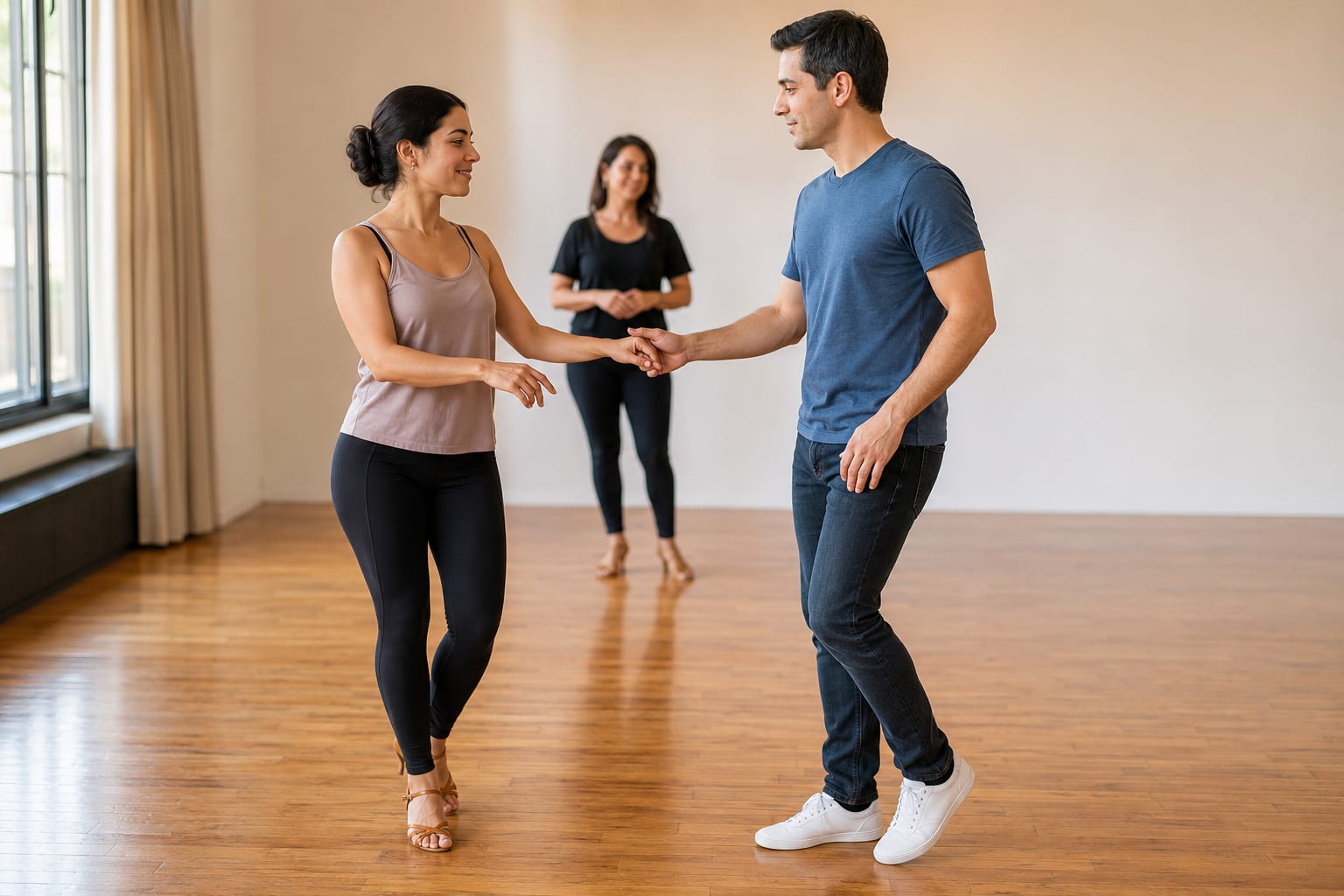
A beginner can usually mark bachata in place or side to side without travelling far. The repeating pattern gives you time to notice your weight changes and reconnect with the beat. You can dance a whole song with the basic, a simple turn and a comfortable handhold.
Bachata also has several forms. Dominican bachata places more attention on rhythm, footwork and the music’s guitar patterns. Modern and sensual classes may add turns, waves, isolations and closer positions. Those additions are not required for a beginner social dance. UNESCO describes Dominican bachata as a music-and-dance tradition with a simple eight-step structure, but the global scene now teaches several distinct approaches.
Festival videos often emphasise large movements because viewers can read them on camera. Our guide to bachata social dancing versus festival demos shows how to separate transferable technique from staged choices.
Close contact is never automatic. Start in an open or standard closed hold, and ask before moving into a close embrace, body wave, dip or other movement that changes the connection. A class that treats consent as part of technique is a better place to learn.
Our guide to the different kinds of bachata explains the styles in more detail.
Why salsa can feel harder in the first month
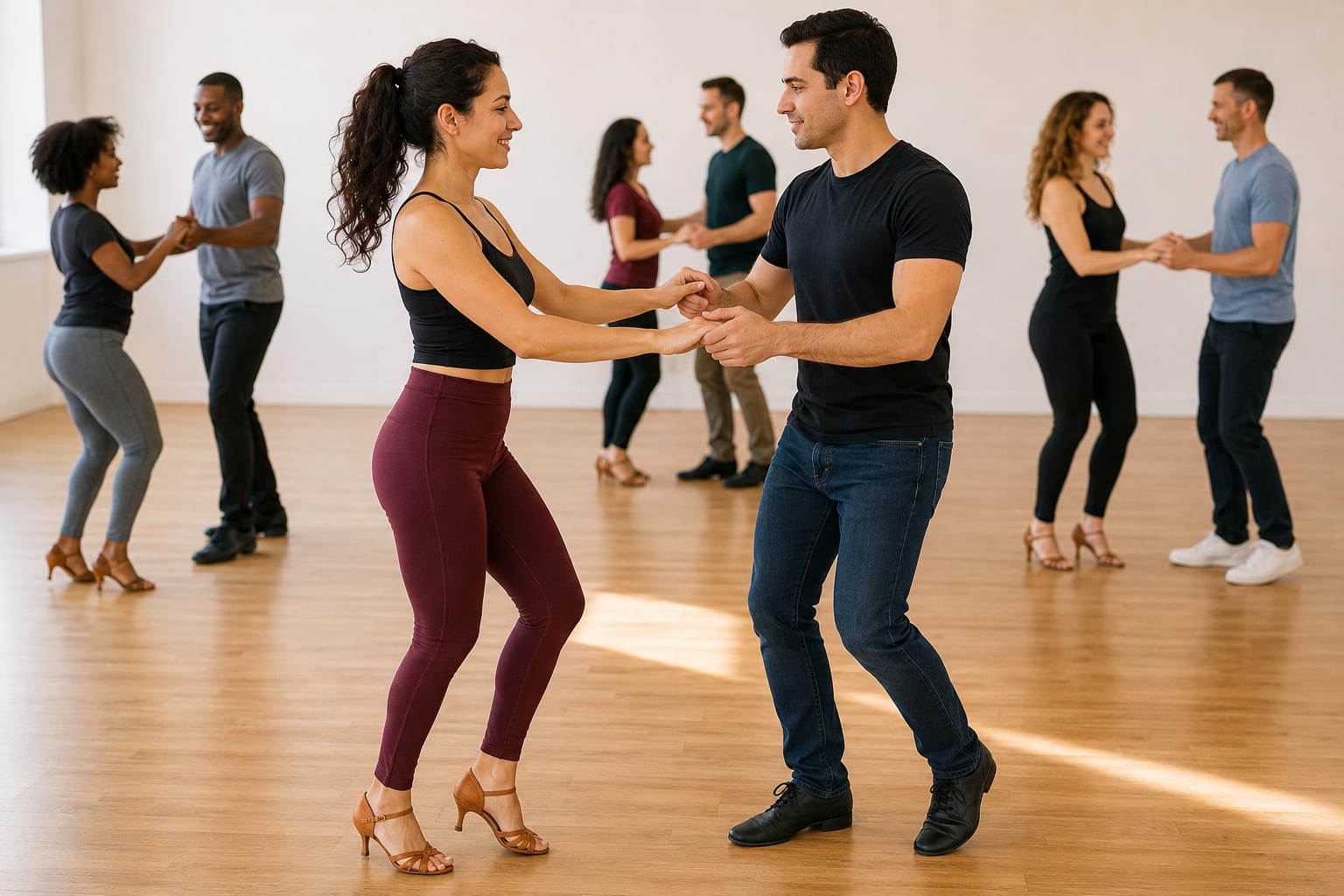
Most salsa basics use six steps across eight musical counts. On1 dancers commonly step on 1, 2, 3 and 5, 6, 7. On2 classes arrange the break step differently. Both leave pauses in the pattern, and new dancers often fill those pauses by accident or rush ahead of the music.
Salsa music also layers percussion, bass, piano and vocals. Finding the basic pulse can take time if you have not listened to the genre before. Once your ear settles, the structure becomes much easier. You do not need to identify every clave or instrument before you can social dance.
Turns arrive early in many courses, which adds balance, spotting, hand connection and timing to the basic. A good teacher keeps the first combinations short. If turns are the sticking point, learn how to spin in salsa without getting dizzy or losing balance before adding another rotation. If your class adds pattern after pattern before the timing is steady, the curriculum may be the problem.
Read our overview of the main salsa styles and the separate guide to choosing On1 or On2 if those labels are new to you.
Music matters more than people expect
You will practise more if you enjoy the music outside class. Salsa rewards close listening to layered percussion and changes in arrangement. Bachata often gives beginners a clearer repeating pulse through guitar, bass and percussion.
- Play a short playlist while walking and mark the basic rhythm without dancing.
- Clap or tap the main pulse before adding footwork.
- Choose slower songs for practice, then increase speed gradually.
- Learn the music played in your local scene, not only the songs used in class.
Which social scene suits you?
Look at the events you can actually attend. Some cities have large salsa nights with a small bachata room; others have mixed Latin socials or bachata-focused events. A style is easier to sustain when you have a welcoming class, beginner-friendly socials and practice partners nearby.
Visit one event before committing. Notice the music mix, how dancers ask each other, whether beginners get dances and whether organizers publish a code of conduct. You can also ask the school which style and timing dominate its socials.
A simple four-week trial
| Week | What to do | What to notice |
|---|---|---|
| 1 | Take one beginner salsa class | Can you hear the count and enjoy the pace? |
| 2 | Take one beginner bachata class | Does the basic feel comfortable and musical? |
| 3 | Repeat the style you preferred | Do you remember the basic without prompting? |
| 4 | Attend an early beginner-friendly social | Do you want to dance another song? |
Wear a clean, secure shoe that can pivot on the floor; you do not need specialised footwear for the trial. If you continue, our salsa shoe guide explains the main options.
Which should you start with?
Bachata is the easier first step for most complete beginners because the basic is repetitive and the early vocabulary can stay small. Salsa usually takes longer to feel relaxed, but it may suit you better if the music, open connection and energy appeal more.
You do not need to choose forever. Build one style until you can keep time through a full song, then add the other without confusing the basics. Our guide to whether salsa and bachata are Latin dances gives more cultural background before you start.