A good practice shoe lets you repeat figures for an hour or two without fighting your footwear. It should stay secure, turn cleanly on your usual floor, and give you enough support for the way you dance. The best choice may be a low teaching shoe, a flexible Oxford or a dance sneaker rather than a competition shoe.
We checked the models and manufacturer information below in August 2026. Availability varies by size and country, so use the fit notes as a shortlist and check the seller’s returns policy before ordering.
| Practice shoe | Best for | Sole and heel |
|---|---|---|
| Bloch Ladies Leather Practice S0850L | Mixed ballroom lessons and teaching | Suede sole; low, wide heel |
| International Dance Shoes Heather Full-Sole | Support and long practice sessions | Full sole; low Cuban heel |
| International Dance Shoes Heather Split-Sole | More arch and forefoot flexibility | Split sole; low Cuban heel |
| Capezio Ballroom Practice | Beginners who want a stable lace-up shoe | Suede sole; 3.2 cm (1.25 in) Cuban heel |
| Sansha Salsette | Flat practice, travel and long workshops | Suede split sole; dance-sneaker build |
| Bloch Boost | High-volume training and dancers who prefer sneakers | Split non-marking sole; built-in arch support |
Are practice dance shoes necessary?
You do not need a separate practice pair for your first lesson. Clean indoor shoes that fit securely are enough to start. Once you train regularly, a dedicated pair makes sense: you can save your satin or patent shoes for performances, use a lower heel during drills, and choose more cushioning for repeated steps.
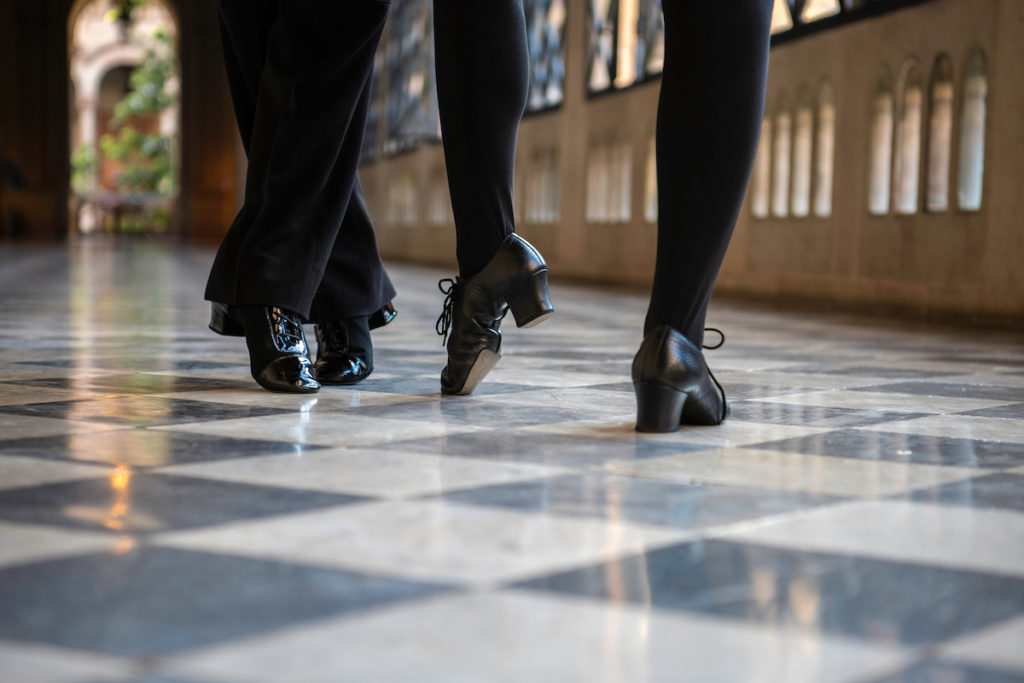
What makes a good ballroom practice shoe?
- Secure fit: your heel should stay seated and your toes should not grip to hold the shoe on.
- Controlled turn: suede works well on clean wooden floors; split rubber soles need a pivot area that will not catch.
- Useful support: choose enough structure for your foot and training load. Maximum softness is not always better.
- Appropriate heel: low, broad heels reduce fatigue and make balance errors easier to correct.
- Breathable upper: perforated leather, mesh or soft fabric helps during long lessons.
- Replaceable role: practice shoes take the wear so your competition shoes do not have to.
If you are still choosing your first pair, read our broader beginner’s guide to ballroom dance shoes. It explains fit, soles and heel types in more detail.
Best ballroom practice shoes for 2026
Bloch Ladies Leather Practice S0850L — best simple teaching shoe
Bloch’s leather practice shoe uses a low, wide heel, perforated upper and suede outsole. Laces let you adjust the fit across the instep, while elastic inserts allow the shoe to point more easily. It is a sensible option for mixed ballroom classes, teaching and long rehearsals.
Choose it if: you want a conservative, stable shoe that works across Standard, Latin and social ballroom. Skip it if: you want the flexibility of a split sole or the look of a Latin sandal. See the current Bloch product page.
International Dance Shoes Heather Full-Sole — best for support
The Heather Full-Sole is built for teaching and practice, with more structure than the split-sole version. It suits dancers who want a low heel and a shoe that supports repeated travelling steps without feeling like a competition court shoe.
Choose it if: you value support and spend long sessions on the floor. Skip it if: you want to show a pronounced arch or need a very flexible forefoot. See Heather Full-Sole.
International Dance Shoes Heather Split-Sole — best for flexibility
The split-sole Heather gives the arch and forefoot more freedom than the full-sole model. That makes it useful for Latin and Rhythm practice, or for experienced dancers who already have the foot strength to control a softer shoe.
Choose it if: you want a low practice heel with clear foot articulation. Skip it if: you are new and feel more secure in a continuous sole. See Heather Split-Sole.
Capezio Ballroom Practice — best stable beginner heel
Capezio’s current Ballroom Practice shoe has a lace-up upper, suede outsole, cushioned insole and a 3.2 cm (1.25 in) Cuban heel. That low, broad heel works well for dancers moving out of flat shoes who do not want a narrow Latin heel.
Choose it if: you want a familiar lace-up fit and a small amount of heel. Skip it if: your class uses outdoor or rough floors. See Capezio Ballroom Practice.
Sansha Salsette — best flat budget practice sneaker
The Salsette is still sold in 2026. Sansha offers versions with mesh and suede or leather details, arch support and a dance sole designed for turns. It is lighter and less formal than a teaching Oxford, which makes it handy for workshops and travel.
Choose it if: you prefer a flat shoe and want more slide than a normal gym sneaker. Skip it if: you need the posture and balance reference of a heel. Check the Sansha listing or Amazon availability.
Bloch Boost — best dance sneaker for high-volume training
The Boost is a split-sole dance sneaker with built-in arch support and a non-marking outsole. It gives more cushioning and a more substantial upper than thin practice shoes. Dancers who teach several classes or attend long congresses may prefer that feel.
Choose it if: comfort and training volume matter more than a ballroom silhouette. Skip it if: you need a suede sole for a particular studio floor. See the Bloch Boost.
Full sole, split sole or dance sneaker?
A full sole gives more continuous support and often suits beginners. A split sole bends easily through the arch and forefoot but asks your foot to do more of the stabilising. A dance sneaker adds cushioning and durability, although the thicker sole can reduce floor feel.
Your floor matters. Suede soles suit clean indoor wood and need brushing. Split rubber dance soles work on more surfaces, but check that the ball of the foot can pivot. Never assume a shoe that slides well in one studio will behave the same way elsewhere.
How to fit and care for practice shoes
- Follow the manufacturer’s chart rather than ordering from street-shoe size alone.
- Try both shoes later in the day and test rises, back steps and turns.
- Keep suede soles indoors and brush them when the nap becomes smooth.
- Air the shoes after practice instead of sealing them in a damp bag.
- Rotate pairs if you dance most days; the upper and cushioning need time to dry.
For most beginners, the best practice shoe is the one that disappears while they learn: low, secure and matched to the floor. If you also need a dressier pair, compare our current ballroom shoe guide.