The best salsa shoe is the one that stays connected to your foot, lets you turn without sticking, and remains comfortable after a full class or social. Heel height and sparkle come later.
For most beginners, a secure dance sandal with a low flared heel, or a flat split-sole dance sneaker, is the safest place to start. Choose suede soles for clean indoor floors and a harder sole for outdoor events or rough venues.
Updated August 2026: We rewrote this guide around fit, heel stability, floor type, and realistic beginner needs. We also replaced the old labelled heel images with a new 2026 comparison graphic.
Do you need salsa dance shoes?
You do not need specialist shoes for your first class. Clean trainers with a fairly smooth sole, a low-profile fashion shoe that stays on your foot, or another comfortable indoor shoe can work while you decide whether you enjoy salsa.
Dance shoes become useful when ordinary shoes start fighting your movement. Thick rubber soles can grip during turns, heavy trainers can make footwork clumsy, and loose fashion shoes can slide away from your heel. A proper dance shoe gives you a closer fit, a lighter build, and a sole made for controlled rotation.
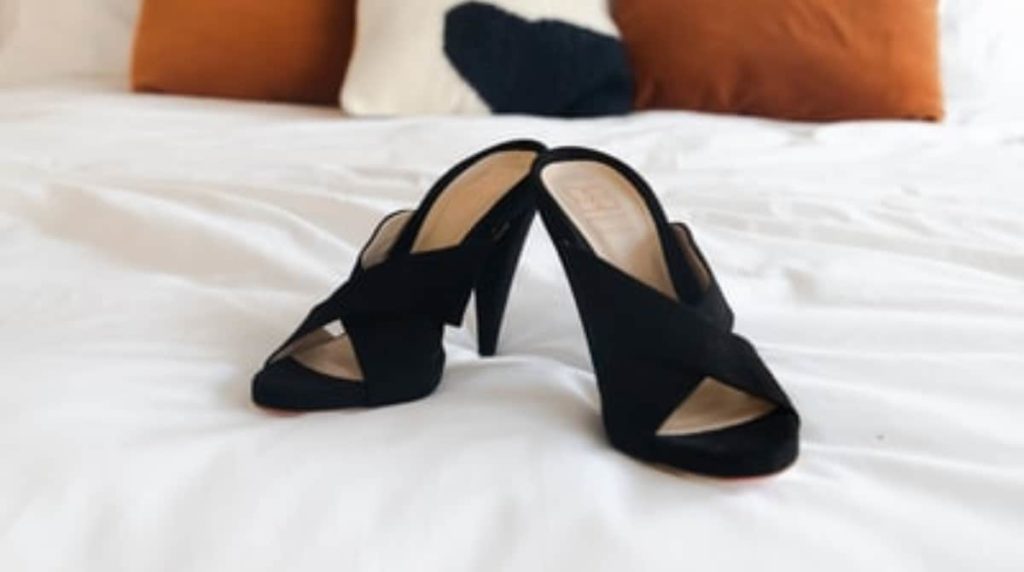
The most important salsa-shoe factors
| Factor | What to look for | Common mistake |
|---|---|---|
| Fit | Snug heel, secure forefoot, toes supported without curling | Buying extra room as if the shoe were a running shoe |
| Sole | Suede for smooth indoor floors; harder leather or synthetic sole for mixed surfaces | Wearing suede outdoors |
| Heel | Low and flared if you are new to heels | Starting higher than you can balance comfortably |
| Support | Straps that hold the shoe to your foot; stable shank and heel cup where needed | Assuming more straps always mean a better fit |
| Flexibility | Forefoot bends enough for weight transfer without folding like a slipper | Choosing a shoe that is either rigid or completely unsupportive |
Fit: snug without crushing your toes
Salsa shoes should fit closer than street shoes. Your heel should not lift as you step, and your forefoot should not slide forward during turns. In an open-toe sandal, the front edge should sit close to your toes without letting them spill over.
Try shoes later in the day, when your feet are slightly larger. Test both feet, walk forward and backwards, rise onto the balls of your feet, and make a few slow pivots. If a strap cuts, the heel wobbles, or your toes grip to keep the shoe on, try a different width or shape.
Heel height and shape
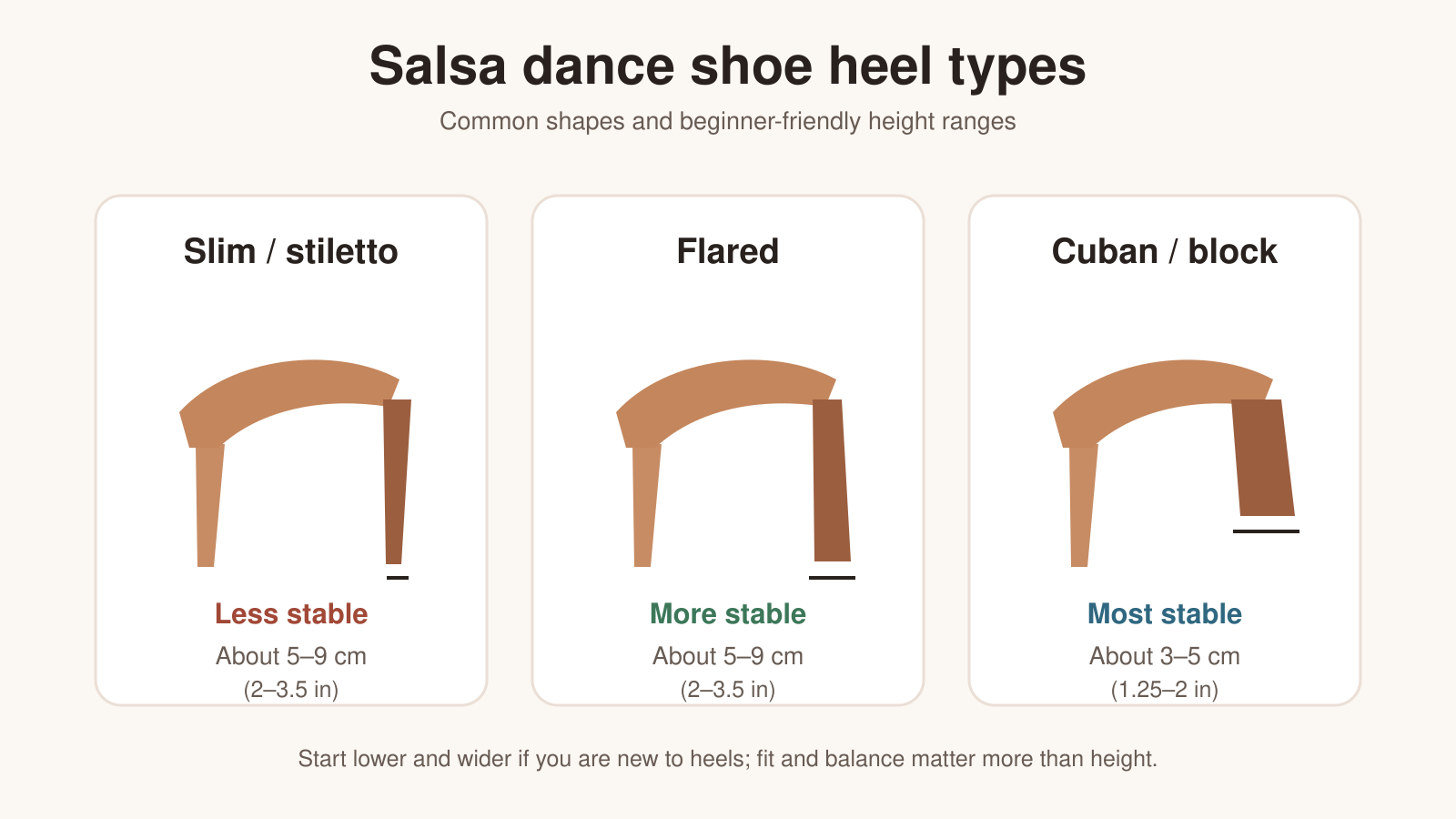
Heel height changes your balance and how much pressure you carry through the front of the foot. A 3–5 cm (1.25–2 in) Cuban or block heel gives the most stable base. A 5–6.5 cm (2–2.5 in) flared heel is a common first heel for dancers who already feel comfortable in heels. Slim heels demand more control and leave less room for a messy landing.
Do not treat a taller heel as a sign that you have progressed. Use the height that lets you keep your knees soft, your weight controlled, and your steps on time. Many experienced social dancers choose lower heels for long nights.
Open toe or closed toe?
Open-toe sandals are common in salsa because they allow the forefoot to articulate and suit Latin styling. They also expose your toes to accidental steps and can feel insecure if the front straps do not match your foot shape.
Closed-toe shoes offer more protection and often feel familiar to beginners. They are a good option for practice, for cooler venues, or for dancers whose toes slide through sandal straps. Neither design is inherently better; fit decides.
Straps, heel cup, and arch support
An ankle or cross strap should stop the shoe moving independently from your foot. Check that the buckle does not sit directly on the ankle bone and that the heel cup does not rub your Achilles tendon.
Arch support varies widely. A flexible Latin sandal may have less structure than a practice shoe or dance sneaker. If you use orthotics or need substantial support, look for a practice shoe with a removable insole or ask a dance-shoe fitter for options. Do not assume a soft padded footbed will correct a poor fit.
Sole material
Suede soles give a useful balance of slide and control on a clean wood studio floor. They pick up dirt and moisture quickly, so keep them indoors and brush them with a suede shoe brush when they become smooth.
Leather soles can work on several indoor surfaces and usually tolerate more wear. Rubber and other synthetic soles are better for concrete, patios, and outdoor festivals, but choose a design made for dance; ordinary rubber can grip too sharply during a turn.
Upper material and breathability
Satin looks clean and moves easily but can stain and wear at contact points. Leather usually softens with use and can last well if cared for. Mesh panels improve airflow but should still hold the forefoot securely. Synthetic uppers cost less, though their stretch and breathability vary.
Practice shoes, performance shoes, and dance sneakers
A practice shoe puts comfort and stability first. Typical designs use a lower Cuban heel, a closed upper, and more cushioning than a strappy performance sandal. They suit long classes, teacher training, and dancers who do not want an exposed toe.
A performance-style sandal is lighter and shows the foot line clearly. It can still work for social dancing if the straps fit and the heel is manageable. A dance sneaker gives a flat or near-flat option with a pivot-friendly sole, which makes it useful for beginners, leads or follows who prefer flats, and anyone managing foot discomfort.
If you want a budget practice option, the YYTing practice shoe is one established listing to compare. Check the current seller, size chart, heel option, and sole material before ordering, because marketplace listings change.
What should your first pair cost?
Budget marketplace shoes can be useful while you learn what shape and heel you like. The trade-off is less consistent sizing, materials, and quality control. Established dance brands usually cost more but may offer clearer width choices, replacement heel tips, better fitting advice, and easier returns.
Set aside part of your budget for the practical extras: a shoe bag, suede brush if needed, spare heel tips, and blister protection. A modest shoe that fits is better value than an expensive pair you avoid wearing.
A five-minute fitting checklist
- Fasten the shoe as you would for dancing, without pulling the straps painfully tight.
- Walk, step backwards, and transfer weight from foot to foot.
- Rise onto the balls of your feet and check whether the heel stays centred.
- Make several slow pivots on each foot. The sole should turn without skating away.
- Keep the shoes on for at least ten minutes indoors before deciding.
Which salsa shoes should you buy first?
If you want heels, start with a secure sandal or closed practice shoe with a 3–6.5 cm (1.25–2.5 in) block or flared heel. If you prefer flats, choose a light dance sneaker with a pivot point or split sole. Match the sole to the floor where you dance most often.
For specific models, see our current lists of women’s salsa shoes and men’s salsa shoes. If you also take ballroom classes, our beginner ballroom-shoe guide explains where the requirements overlap.