Jazz dance is a broad family of African American dance traditions built around rhythm, personal expression and a close relationship with music. In a present-day studio, “jazz” may also mean a technique class that combines those roots with ballet-based turns, kicks, leaps and theatrical choreography.
That range explains why two jazz classes can look very different. One may focus on grounded groove and improvisation; another may teach crisp Broadway choreography. A good class should tell you which approach it takes rather than treating all jazz as one fixed style.
Where jazz dance comes from
Jazz dance developed through African American social and performance traditions in the United States. Its foundations include syncopation, improvisation, grounded movement, isolations and polycentric movement, where different parts of the body carry different rhythms. These ideas grew through forms such as the cakewalk, Charleston, Black Bottom, tap and Lindy Hop alongside the development of jazz music.
During the twentieth century, artists including Katherine Dunham, Jack Cole, Alvin Ailey, Luigi, Matt Mattox and Bob Fosse shaped stage and studio jazz in distinct ways. Ballet technique became a larger part of commercial and theatrical training, but jazz did not begin as ballet with popular music. Its Black social-dance roots are central to the form.
If the rhythmic, social side interests you, our guide to swing dance styles explains several dances that grew alongside jazz music.
What jazz dance looks like in 2026
| Class label | What you are likely to practise |
|---|---|
| Jazz technique | Isolations, turns, kicks, leaps, travelling steps and a choreographed combination |
| Theatre or Broadway jazz | Character, clear storytelling, stylised gestures and stage-facing choreography |
| Commercial jazz | Camera-ready choreography drawing from jazz, hip-hop and pop performance |
| Contemporary jazz | Jazz technique mixed with contemporary floorwork, release and longer movement phrases |
| Vernacular or solo jazz | Rhythm, groove, improvisation and steps connected to African American jazz traditions |
These labels are not perfectly standard. Read the class description, watch a studio video if one is available, and ask whether the class is suitable for an adult with no recent dance training.
What happens in a beginner jazz class
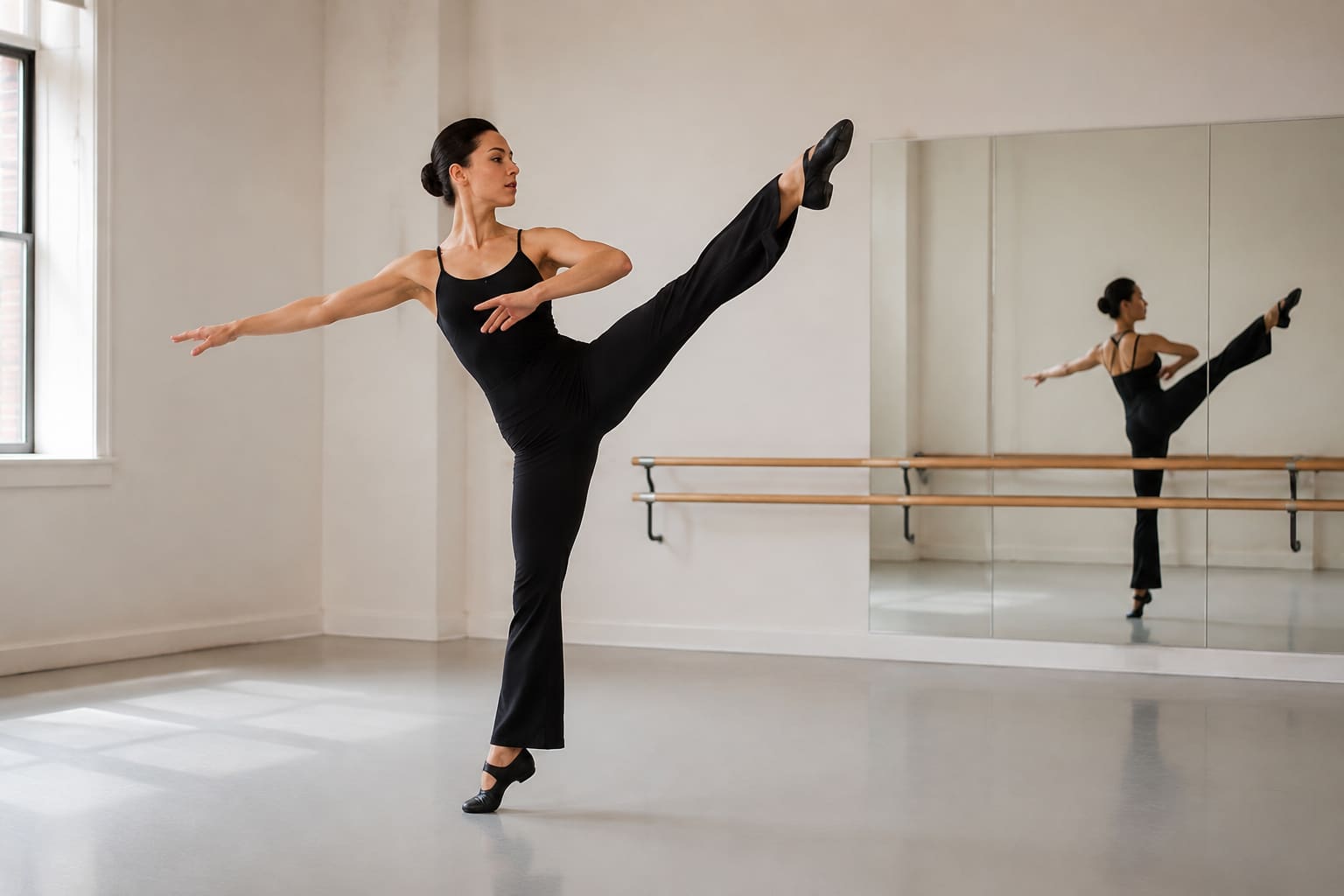
Most studio classes start with a standing warm-up and mobility work. You may then practise isolations, pliés, tendus, contractions, parallel and turned-out positions, and basic weight changes. Across-the-floor exercises add walks, chassés, pas de bourrées, kicks, turns and simple leaps. The class normally ends with a short combination. Our adult beginner jazz isolation guide breaks the ribcage, hip, shoulder and head work into a short drill.
A beginner class should build each movement progressively and offer lower-impact options. You do not need a full split, a high kick or a clean double turn before you start. Control, timing and safe alignment matter more than range. If combinations still move faster than you can parse them, our eight-week adult beginner jazz plan gives you a weekly focus for walks, weight changes, small turns and phrase recall. For an in-class method when a combination moves fast, try our jazz choreography learning guide.
Basic jazz terms you will hear
- Isolation: moving one body area while controlling the rest.
- Jazz square: a four-step crossing pattern, also called a box step.
- Ball change: a quick transfer of weight from the ball of one foot to the other foot.
- Pas de bourrée: a three-step linking pattern borrowed from ballet and used in many directions.
- Chassé: a travelling step in which one foot appears to chase the other.
- Contraction: a controlled curving action through the torso, strongly associated with modern and jazz technique.
- Spotting: coordinating the head during turns to help orientation and control.
What to wear
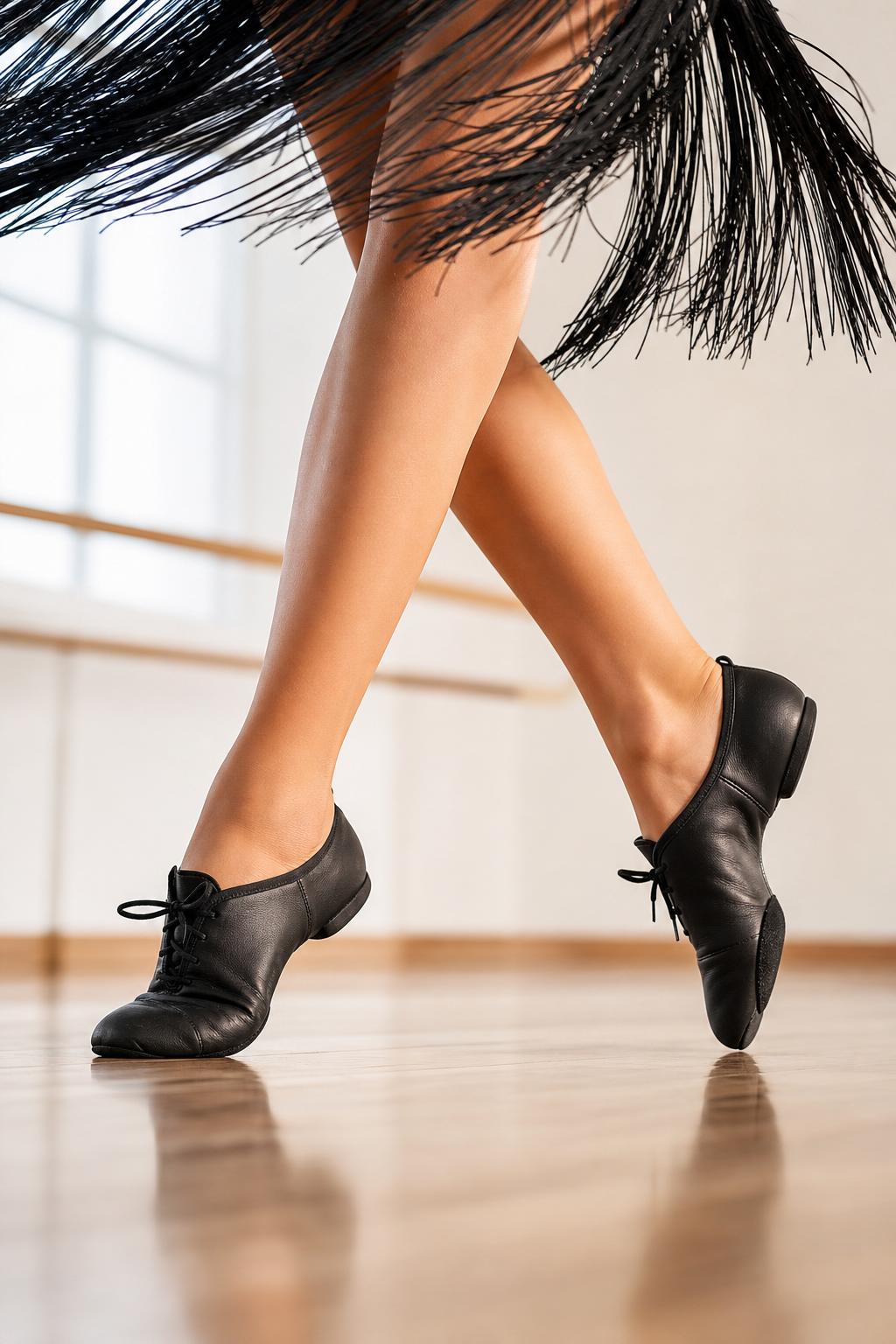
Wear clothes that let you bend, kick and reach without constant adjustment. An instructor also needs to see enough of your alignment to correct knees, hips and torso. Leggings, fitted training pants, shorts and a secure top all work; the exact choice does not need to look like traditional dancewear.
For shoes, follow the studio’s policy. Many adult beginners start in clean indoor trainers for a commercial class or soft jazz shoes for a technique class. Jazz shoes should fit close to the foot without crushing the toes. Split soles make the foot look and move more freely, while full soles can give a new dancer a little more structure. Socks are sometimes allowed for floorwork but can be too slippery for turns.
Is jazz dance good exercise?
A typical class challenges coordination, balance, leg strength, mobility and cardiovascular fitness. The intensity varies widely: a technique drill can be slow and demanding, while a full-out combination may feel like interval training. If you have a current injury or are returning after a long break, tell the teacher before class and take the offered modifications.
How to choose your first class
- Look for “adult beginner”, “absolute beginner” or “intro”, not only “open level”.
- Check whether the class is theatre, commercial, contemporary or vernacular jazz.
- Ask about footwear and floor type before buying shoes.
- Choose a teacher who explains alignment and offers progressions instead of pushing range.
- Give yourself several classes. The vocabulary feels much less crowded once common transitions become familiar.
Jazz suits adults who enjoy choreographed movement, musical detail and a mix of technique and personality. If you want partner dancing rather than a solo studio class, compare it with our guide to starting salsa or bachata.