Salsa dancers use “On1” and “On2” to describe where the break steps fall in an eight-count phrase. The choice changes the feel of the basic, but it does not change the underlying music. You still step three times and pause or tap once in each four-beat half of the phrase.
If you are new, learn the timing used by your local classes and socials first. Once you can hold that timing without counting every step, learning the other version becomes much easier.
The short answer: On1 versus On2
| Timing | Where the lead role breaks | Common association |
|---|---|---|
| On1 | Forward on 1, back on 5 | LA-style linear salsa and many beginner classes |
| Eddie Torres On2 | Back on 2, forward on 6 | New York-style salsa |
| Power 2 / Palladium 2 | Breaks on 2 and 6, with steps commonly counted 2-3-4 and 6-7-8 | Older mambo timing |
The follow role mirrors those directions. Teachers may start on the opposite side, and dancers sometimes use different names for the older On2 systems, so check the foot pattern rather than relying only on the label.
How On1 works
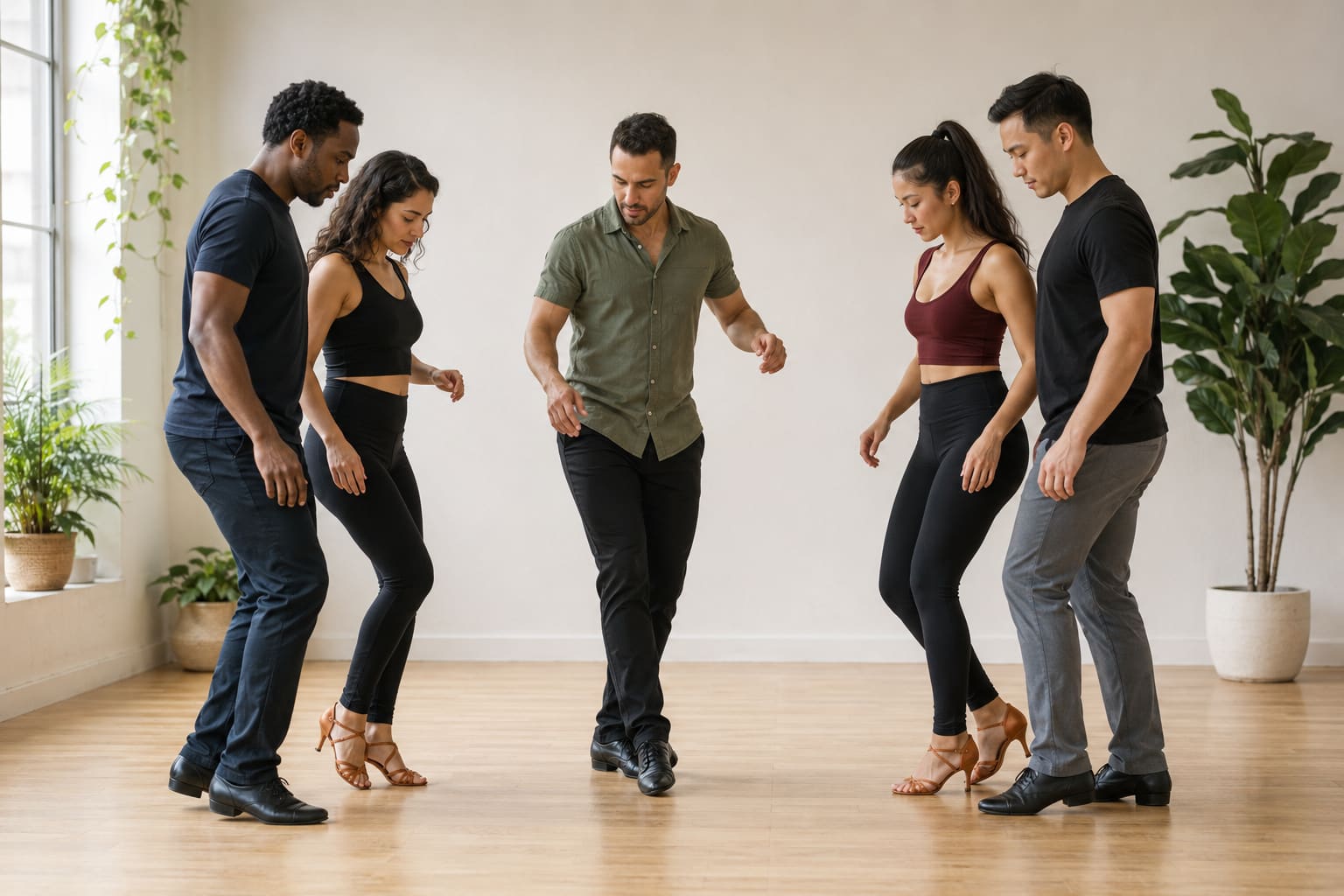
In a common On1 basic, the lead role steps forward with the left foot on 1, replaces weight on 2, and closes or steps in place on 3. They pause on 4, then step back with the right foot on 5, replace on 6, and close on 7. Beat 8 is the second pause.
That first forward break lands on the downbeat, which makes On1 easy to find in songs with a clear opening accent. The timing is widely taught in linear salsa classes, especially where LA-style vocabulary is common. It also gives beginners a simple link between “start” and beat 1.
How Eddie Torres On2 works
Eddie Torres timing still uses steps on 1-2-3 and 5-6-7. The difference is the direction and emphasis. The lead role usually marks or travels slightly on the left foot on 1, breaks back on the right foot on 2, and replaces on 3. In the second half, they mark on 5, break forward on the left foot on 6, and replace on 7.
The break steps therefore line up with beats 2 and 6. Many dancers connect that feel to the conga tumbao, particularly the open tones around 4-and and 8-and that lead into the next half of the phrase. You do not have to chase one instrument, though. Bass, piano, vocals and arrangement cues can all help you keep your place. If 1 and 5 still sound alike, try our step-by-step listening drill for finding 1. Our salsa instrument guide helps you identify the conga, bass and piano by sound before you use them as timing clues.
On2 is strongly associated with New York salsa and was popularised internationally through Eddie Torres’s teaching. It is often called “mambo”, though mambo also describes music and older dance timings, so the word can mean different things in different communities.
Does On2 suit some songs better?
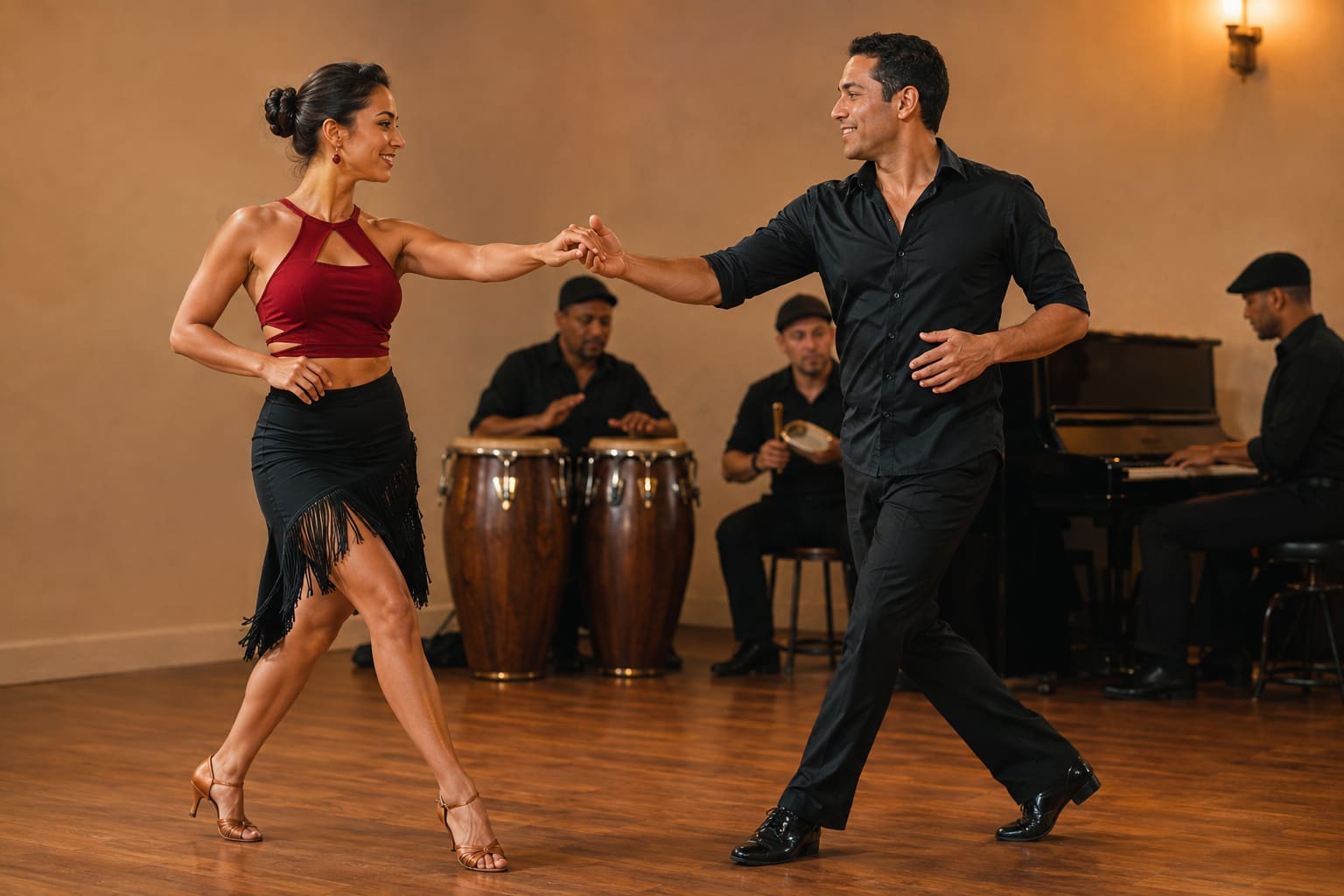
You can dance a well-phrased salsa song On1 or On2. The song does not dictate a single correct timing. On2 dancers often enjoy tracks with exposed conga, bass and mambo sections because the break on 2 gives those layers more attention. On1 can feel direct when the arrangement hits beat 1 hard or drives strongly through the downbeat.
That is preference, not a rule. Staying with your partner and holding a consistent basic matters more than choosing the timing that seems most sophisticated.
Which timing should you learn first?
- Choose On1 first if most local beginner classes and socials use it, or if you find the downbeat easiest to hear.
- Choose On2 first if your local community mainly dances New York style and you have regular access to an On2 teacher.
- Stay with one system for a full course rather than switching every lesson. Your weight changes need time to become automatic.
- Learn both later if you travel, attend congresses or want to dance comfortably with more partners.
If you are still comparing the broader families of salsa, read our guide to the main salsa dance styles. Timing and style overlap, but they are not identical: a dancer can use different movement qualities while keeping the same count.
How to switch without losing the beat
First practise the new basic alone. Count aloud, keep every step small, and make the break step a real change of direction rather than a pose. Then practise to songs with clear percussion at a moderate tempo. Our salsa shine practice guide gives you short footwork patterns to test that timing on your own. Only add turns after you can start, stop and recover the basic without help.
When you dance with a partner, agree on the timing before the song or make the first basic unmistakable. Do not try to “correct” someone mid-dance by pulling them onto your count. Reset, simplify and ask afterward if you are unsure. Our social dance etiquette guide covers the same principle in more detail.
The practical verdict
On1 gives many beginners the clearest entry because the first break lands on beat 1. Eddie Torres On2 keeps the same 1-2-3, 5-6-7 stepping rhythm but places the breaks on 2 and 6, creating the feel associated with New York salsa. Neither is a higher level of salsa. Learn the timing your community uses, make it steady, and add the other when you can hear and control both.