If your salsa looks fine in class but falls apart at a social, the problem is usually not a lack of moves. Social dancing adds unfamiliar partners, louder music, crowded floors and no teacher counting beside you. The fastest progress comes from making timing, weight transfer and connection reliable under those conditions.
The priority order: timing first, then balance, connection, floorcraft and a small set of patterns. Add styling and more combinations after those parts hold together.
1. Fix your timing before learning another pattern
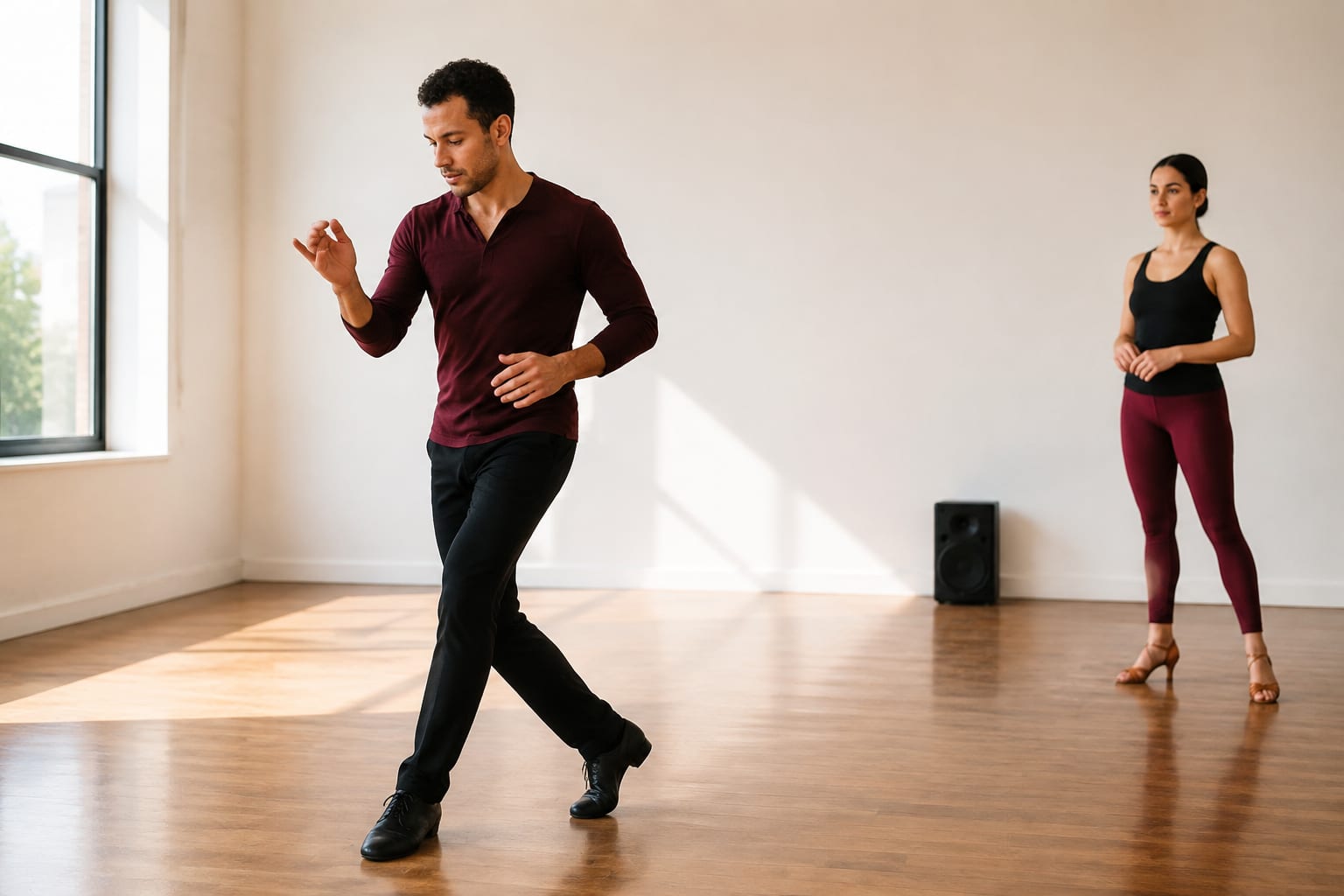
Pick the timing your class and local scene use, usually On1 or On2, and practise that version consistently. Do not switch in the middle of a song because you lost the count. Pause, find the next clear phrase and restart.
- Mark the basic to one slow song without turns.
- Say the six step counts out loud and keep the two pauses empty.
- Listen again while standing still and identify the start of each eight-count phrase.
- Record 30 seconds of your basic and check whether your feet land with the music.
Use our method to study a dance video in separate layers when your recording shows a problem but you can’t identify its cause. You can learn more about the timing choices in our On1 versus On2 guide. You do not need to “graduate” from one to the other; both support advanced dancing.
A short routine also helps you repeat the count without collecting more combinations. Use the salsa section of our 15-minute solo practice plans for salsa, bachata and West Coast Swing between classes.
2. Make every step a real weight change
Many balance problems start when a dancer taps or reaches without committing their centre over the supporting foot. Keep the steps small enough that you can transfer fully and arrive on time. Your free foot should then be available for the next step or turn.
Practise forward, back and side basics in front of a mirror. Keep your head level and let the knees stay soft. If your upper body rocks or your feet cross accidentally, reduce the step size. If the basic is steady but rotation still causes trouble, work through our guide to how to spin in salsa without getting dizzy or losing balance.
3. Use less force in the connection
A clear lead or follow comes from timing, direction and consistent tone, not squeezing or pulling. Hold hands lightly enough that both people can adjust. Keep the shoulders down and let the arms respond from the body rather than working on their own.
- Leaders: prepare direction changes early and avoid steering with the thumbs.
- Followers: keep your own balance and wait for the direction rather than guessing the pattern.
- Both: reset to a comfortable open hold when the connection becomes tangled.
Roles describe the job in the dance, not gender. Anyone can lead, follow or learn both. Our lead-and-follow role-switching guide shows how to start the other role with a basic, a willing partner and clear social agreements.
4. Build a five-pattern social set
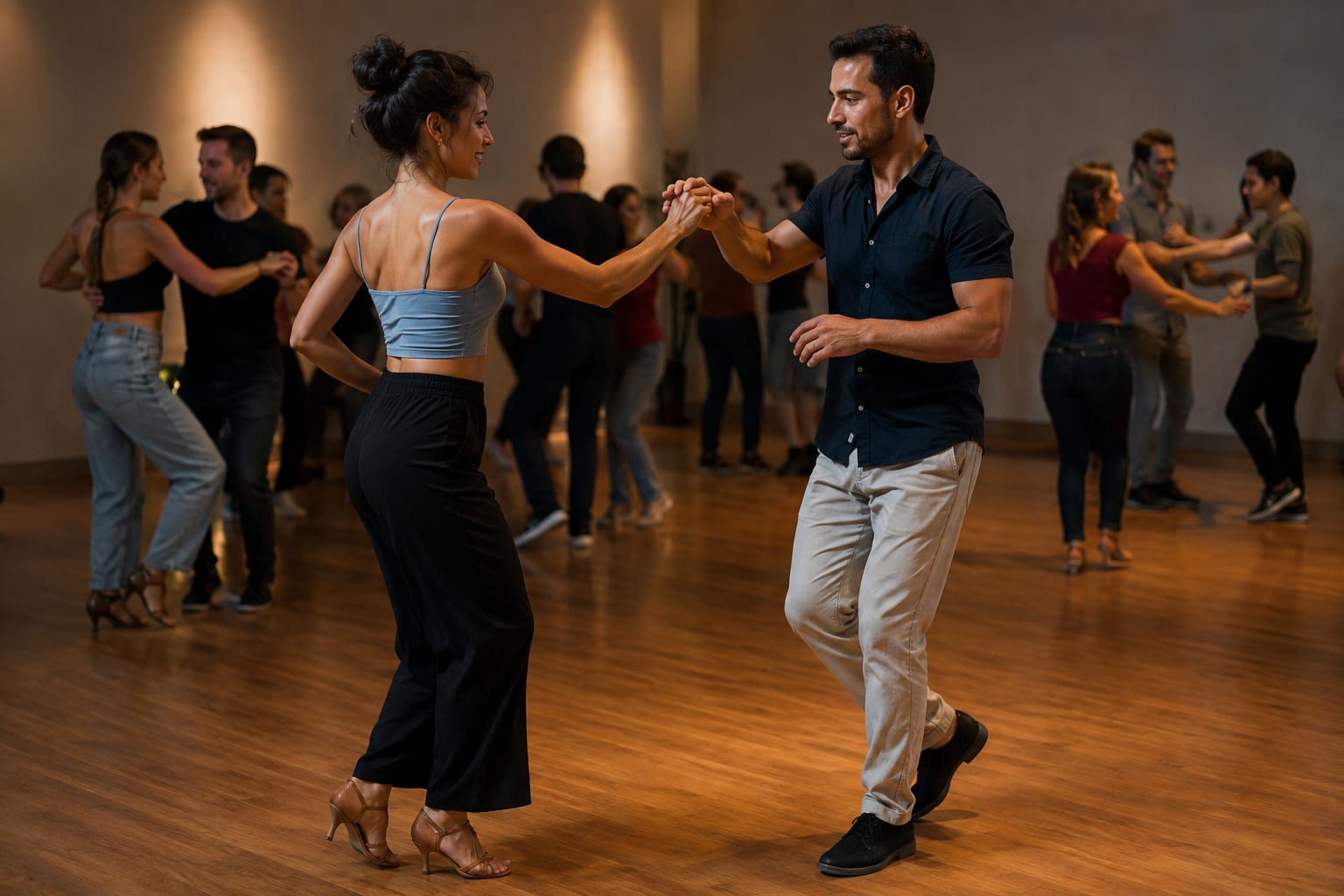
Choose patterns you can enter and exit without stopping. A practical On1 or On2 social set might include a basic, right turn, left turn, cross-body lead and inside turn. Casino dancers will use different names and structures, but the principle is the same.
Practise every transition in both directions. Repeat a pattern after a basic rather than forcing the next item from a memorised routine. Your partner does not know the sequence, so each cue must work on its own.
5. Improve floorcraft
Keep your patterns inside the area you can see and control. The leader usually has the better view of traffic, but both partners can protect the shared area. On a crowded floor, shorten travelling moves, lower the turn count and avoid dips.
Floorcraft also means matching the dance to your partner. Start simply, notice how they respond and increase complexity only when the connection stays comfortable. Read our beginner salsa etiquette guide before your next social.
6. Add musicality in small doses
Musicality starts with staying on time. Once that is reliable, listen for phrase changes, breaks and changes in energy. You can respond by pausing, repeating a basic, changing direction or reducing your movement. Our salsa shine drills give you ten compact ways to train that control before a social. When you use them with a partner, our guide to salsa shines in a social dance covers the breakaway and return. You do not need a dramatic body movement for every accent.
Choose one song and listen to it several times. First follow the main pulse, then notice the piano and percussion, then listen for sections where instruments enter or drop out. Dance the basic on the final listen and make one clear change at each section.
7. Practise socially, not only in class
A class gives you information; a social shows which parts you can use. Go early when the floor is quieter and set one goal for the night. You might keep On1 timing through every song, use only compact patterns or ask three new partners to dance.
Do not correct partners during a social. If something fails, return to the basic. Save technical discussion for a practice partner who has agreed to feedback.
A weekly plan that produces visible progress
| Session | Time | Focus |
|---|---|---|
| Solo timing | 15 minutes | Basic step to two slow songs |
| Technique | 20 minutes | Weight transfers and turns on both sides |
| Partner practice | 30 minutes | Connection and five dependable patterns |
| Social | 60–120 minutes | One simple goal under real conditions |
| Review | 10 minutes | Write down one success and one problem |
Repeat the same focus for two weeks before changing it. Improvement is easier to see when you stop moving the target. If the result still isn’t changing, work through our dance plateau diagnostic before adding more patterns.
What to stop doing
- Collecting combinations you cannot lead or follow cleanly.
- Taking steps so large that you arrive late.
- Using arm strength to compensate for poor timing.
- Practising only to one teacher’s slow count.
- Judging progress by how advanced your patterns look.
The fastest route to better social salsa
Make the basic feel dependable at several tempos, keep your own balance and communicate with less force. Then take five patterns to real socials until you can use them with different partners and floor conditions.
Good shoes help if your current pair catches during pivots; see our guide to the best men’s salsa shoes and our general salsa shoe buying guide. Technique still does most of the work.