A salsa social becomes much easier once you know the basic customs. Anyone can ask anyone to dance, anyone can decline, and either partner can stop at any time. The rest is practical: share the floor, keep your partner comfortable and say thank you when the song ends.
The rule underneath every rule: A dance is a mutual agreement, not an obligation. Ask, wait for an answer and accept a no without asking for a reason.
How to ask someone to dance
Make eye contact, offer an open hand without grabbing and ask, “Would you like to dance?” The exact words do not matter. The other person needs a clear chance to answer before you move toward the floor.
- Ask between songs or near the start of a song.
- Do not interrupt someone who is eating, on the phone or in a private conversation.
- Anyone may ask, regardless of gender or dance role.
- Ask once. Repeating the request after a no creates pressure.
A hand gesture can be enough in a loud room, but do not treat silence or an uncertain expression as yes. Wait for a clear response.
How to accept or decline
“Yes, thanks” is enough to accept. “No, thank you” is enough to decline. You do not need to explain whether you are tired, injured, waiting for someone or simply do not want to dance.
If you say “maybe later,” mean it only if you want the person to ask again. If you decline one person and immediately accept another, the first person may feel disappointed, but you still control who you dance with.
When someone declines, smile and move on. Do not demand a reason, complain or ask again during the same song.
Consent continues during the song
Agreeing to dance does not approve every hold or movement. Ask before a close embrace, deep dip, lift, drop, body wave or other move that changes the contact or risk. Many festival and social codes now state this explicitly.
- Keep the first connection neutral and comfortable.
- Do not force a partner’s head, neck, back or hips into a shape.
- If a partner pulls away, stiffens or says no, reduce or stop the movement.
- Either person can end the dance immediately.
A useful question is specific: “Are you comfortable with dips?” A yes applies to that question, not to everything else.
What to do during the dance
Start with the basic and simple turns while you learn how the other person moves. Match the complexity to the connection, music and floor. The goal is a comfortable shared dance, not a test.
- Keep your grip light and never squeeze fingers or thumbs.
- Stay on your own balance instead of hanging from your partner.
- Avoid unsolicited teaching or corrections.
- Do not film a partner without asking.
- If you collide, check that everyone is all right and reduce your movement.
If you want to improve your technique outside the social, see our guide to improving salsa social dancing.
Floorcraft on a crowded salsa floor
Use only the area you can see and control. Leaders usually face more of the traffic, but followers can also shorten steps and flag an immediate hazard. Keep travelling patterns compact and skip dips, lifts and large styling when couples are close.
If the floor becomes unsafe, finish the song at the edge or take a break. A crowded room does not excuse kicking, stepping on people or sending a partner into another couple.
How many songs should you dance with one person?
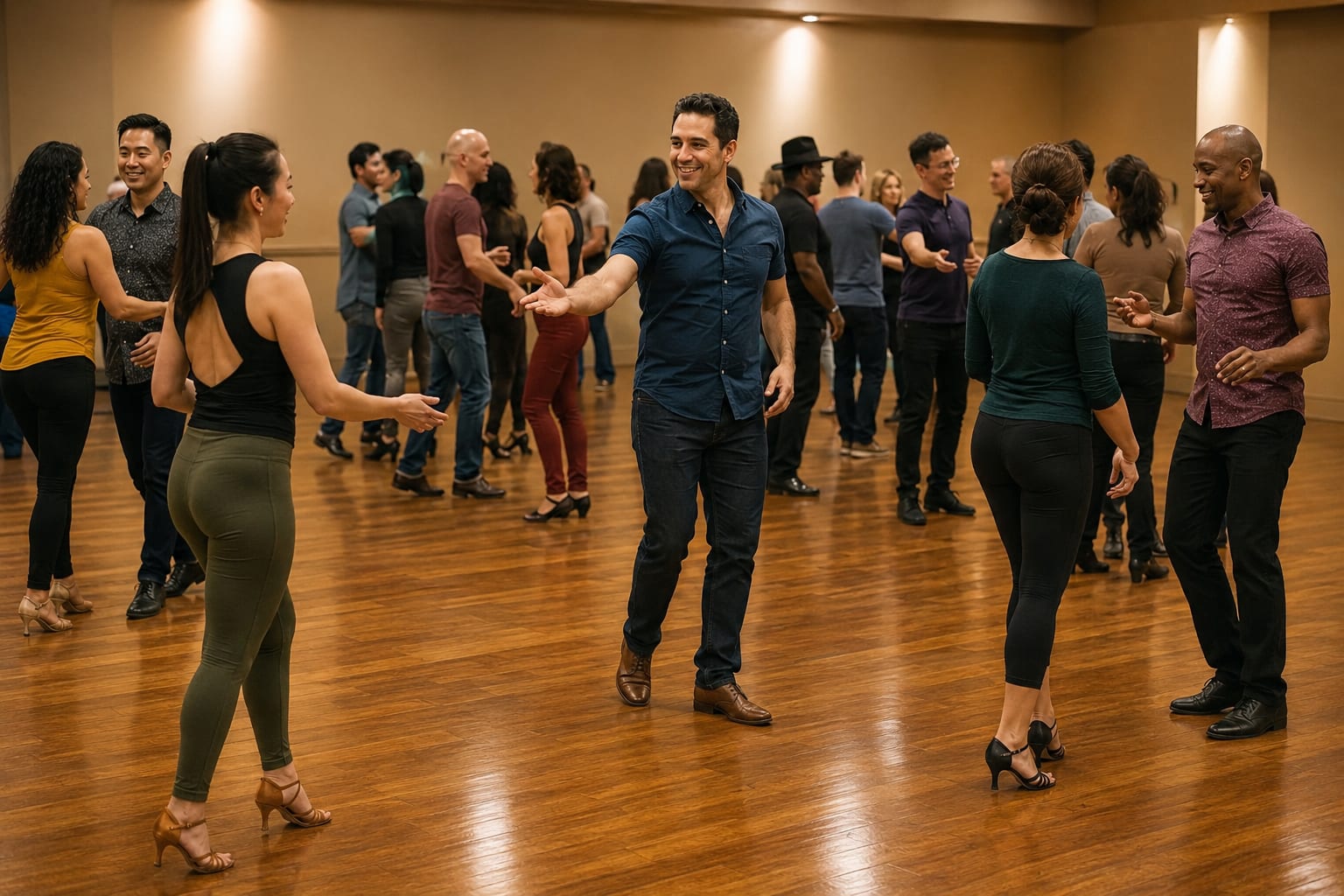
One song is the common default at many salsa socials, then both people thank each other and decide what to do next. Some local scenes regularly dance two songs, and friends may continue longer. There is no universal rotation system.
Do not hold on to a partner as the next song begins. Release the connection and ask again if you want another dance. They can say yes or no.
How to end a dance
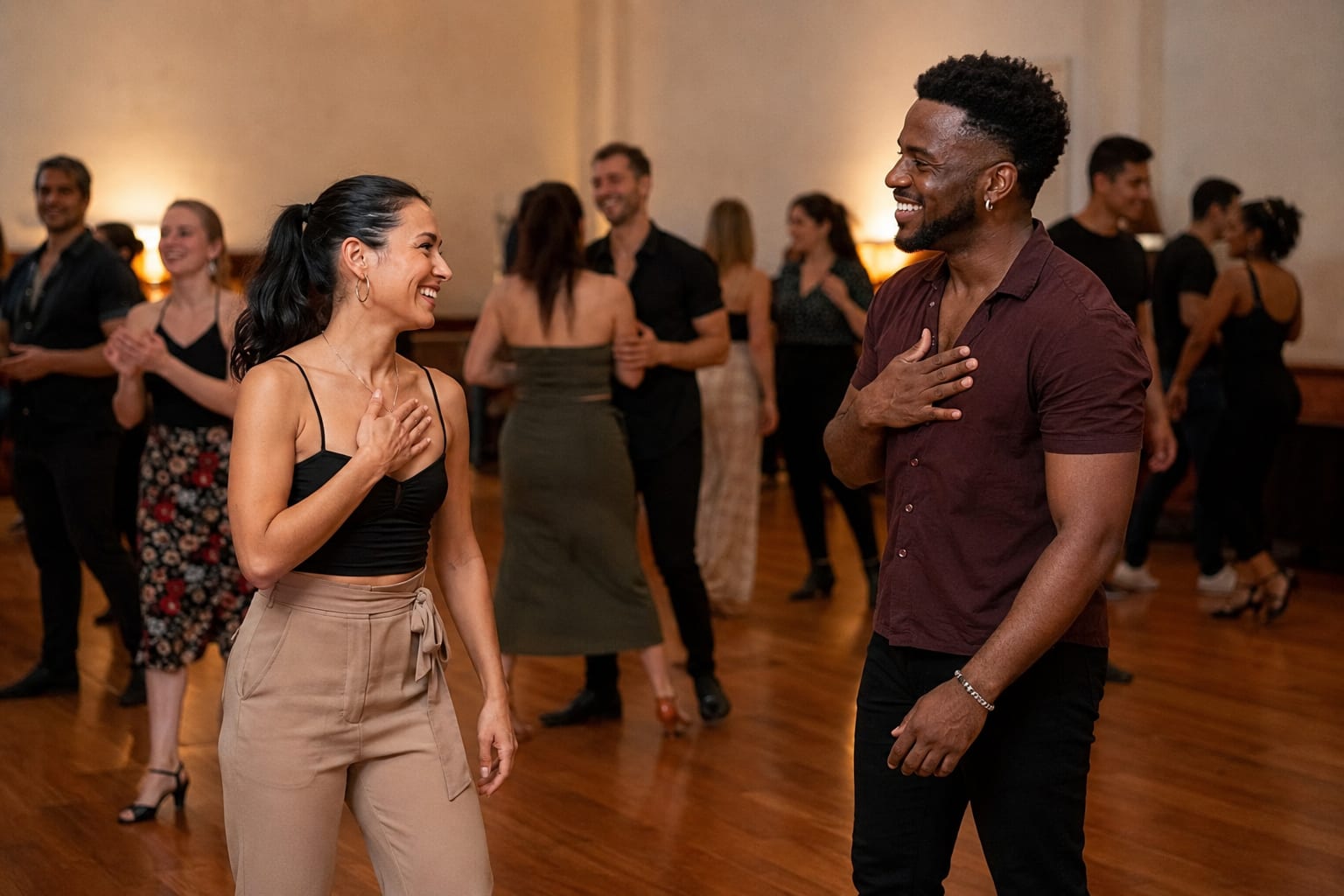
When the song ends, release the hold, make eye contact and say thank you. You do not need to review the dance or apologise for mistakes. A brief positive comment is fine if it is sincere.
If you need to stop early, say so directly: “I need to stop, thank you.” Move to the edge of the floor. Pain, dizziness, unwanted contact or feeling unsafe are all reasons to end immediately; you never need to wait for a musical break.
Hygiene and clothing
Social dancing puts people close together. Shower, wear clean clothes, use deodorant and carry a spare top if you sweat heavily. Avoid strong perfume and check your breath before asking partners.
Secure jewellery, long hair and loose accessories that may hit someone during a turn. Wear clean shoes that suit the floor. Our salsa shoe guide covers sole and fit choices.
What if someone behaves badly?
Move away and tell the organiser, door staff or designated safety contact. You can name the behaviour plainly: unwanted touching, repeated pressure after a no, unsafe dips, harassment or filming without consent. A responsible event will have a way to report problems.
If you witness a problem, check in with the person affected and ask what support they want. Do not start a confrontation that may make the situation less safe.
First-social checklist
| Before | During | After |
|---|---|---|
| Check the venue rules and music mix | Ask and wait for a clear yes | Thank your partner |
| Wear clean, secure shoes | Keep patterns compact | Release the hold between songs |
| Bring water and a spare top | Ask before close or high-risk moves | Report unsafe behaviour |
Good etiquette is clear and ordinary
You do not need elaborate rules to handle a salsa social well. Ask clearly, accept every answer, pay attention during the dance and stop when either person wants to stop. Those habits matter more than your level.
For advice that applies across partner-dance scenes, read our broader guide to social dance etiquette for leaders and followers.