Your first pair of ballroom shoes should make learning easier. You need a secure fit, enough flexibility to use your feet, and a sole that lets you turn without sticking or sliding away. A lower, broader heel usually gives a beginner the best place to start.
This guide explains the differences between Standard, Smooth, Latin and Rhythm shoes, how dance-shoe sizing works, and what to look for before you buy. Product ranges, prices and fitting advice were checked in September 2026.
Updates
- September 2026: Added current LunaSol models, prices and official high-resolution product images.
- September 2026: Added wedding and formalwear choices for dancers who want one pair for the full event.
| If you mainly dance… | A practical first shoe | Why |
|---|---|---|
| Standard or American Smooth | Closed-toe court shoe or men’s 1 in ballroom Oxford | More foot coverage and a broad, stable heel |
| Latin or American Rhythm | Open-toe sandal with a 2–2.5 in flared heel, or men’s 1.5 in Latin shoe | More forefoot flexibility and easier articulation |
| Mixed beginner classes | Low practice shoe, teaching sandal or flexible ballroom shoe | Comfortable across several dances and long lessons |
| You are not ready for heels | Flat dance sneaker with a pivot point | Lets you turn while you build technique and strength |
Do beginners really need ballroom dance shoes?
You can take a first class in clean indoor shoes that stay secure on your feet. Avoid running shoes with grippy rubber soles: they resist pivots and can put more twisting load through your knees. Loose slip-ons and backless shoes create a different problem because your toes have to grip to keep them on.
A purpose-made dance shoe becomes worthwhile once you attend regularly. Suede or dance-specific leather soles give you controlled slip, the shank and upper let the foot articulate, and a secure fastening keeps the shoe with you through turns. If you want model recommendations, see our current guides to women’s beginner ballroom shoes and men’s ballroom shoes.
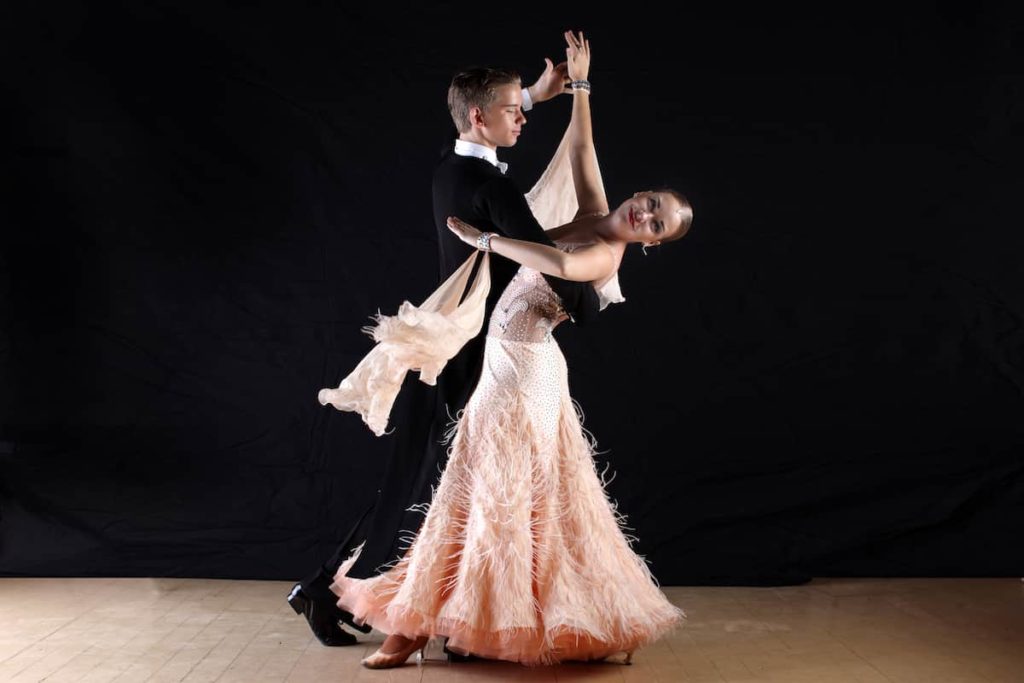
Standard and Smooth vs Latin and Rhythm shoes
International Standard and American Smooth shoes usually have a closed toe. Women’s court shoes cover and support the forefoot, while men’s shoes use a low heel and a longer, more stable shape. Standard shoes suit waltz, tango, Viennese waltz, foxtrot and quickstep. Smooth dancers use similar shoes, although choreography may call for more flexibility.
Latin and American Rhythm shoes allow more forefoot movement. Women’s styles are often open-toe sandals with flexible straps. Men’s Latin shoes usually have a rounder toe, a shorter shank and a higher Cuban heel than Standard shoes. They suit cha-cha, rumba, samba, paso doble and jive, with American Rhythm adding dances such as mambo and bolero.
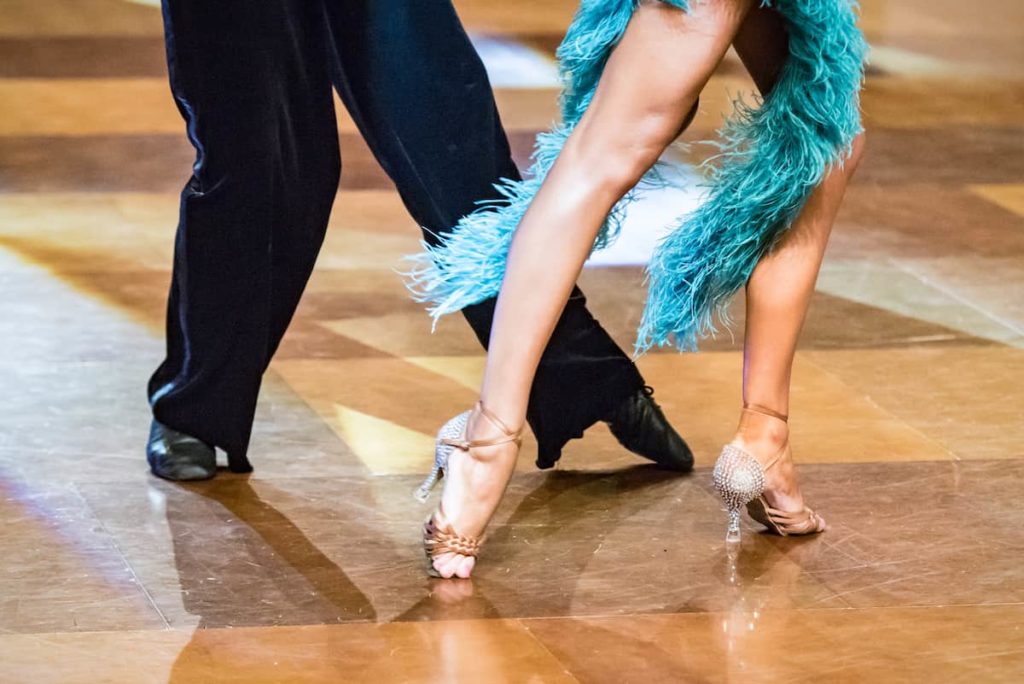
How ballroom dance shoes should fit
Dance shoes should feel close and secure, with no heel lift and no dead space around the toes. They should not crush your toes, numb your foot or create sharp pressure. Leather and satin uppers may soften with wear, but a painful shoe is not a good sizing strategy.
- Check the maker’s own chart. Dance sizing is not standard across brands.
- Measure both feet and fit the larger one.
- Try shoes later in the day, when your feet are closer to their usual dancing size.
- Test forward steps, back steps, rises and turns on a clean indoor floor.
- Keep the pair only if the heel stays seated and every strap holds without cutting in.
Width matters as much as length. International Dance Shoes, for example, currently offers several width fittings and explains that its fittings change the circumference around the forefoot. That is more practical than automatically sizing up for a wide foot. If possible, use a specialist retailer with a good exchange policy or book a fitting.
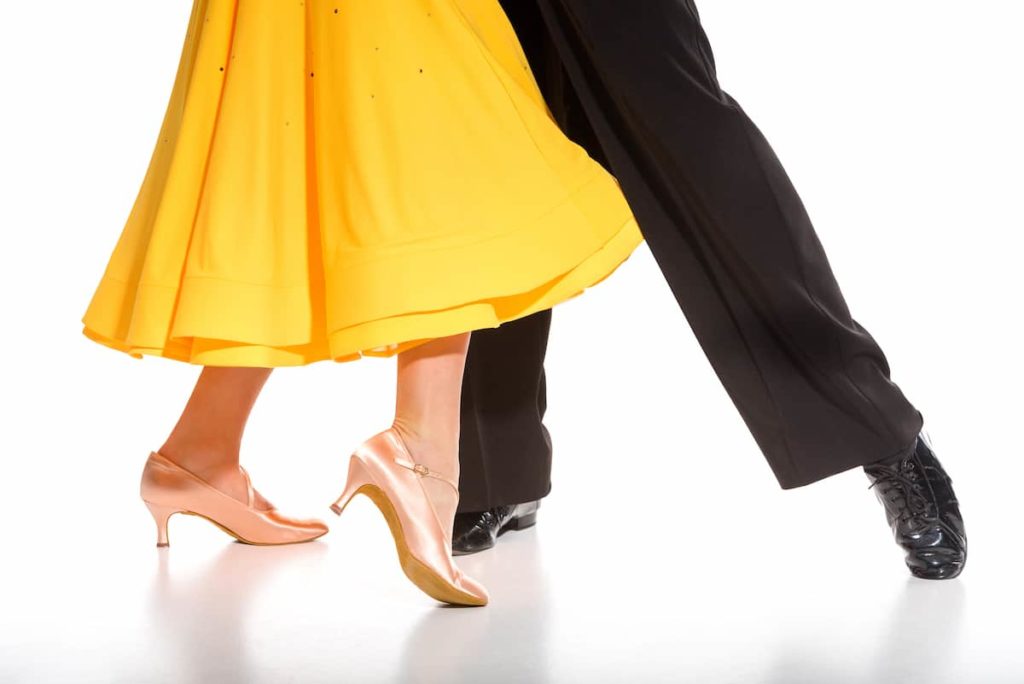
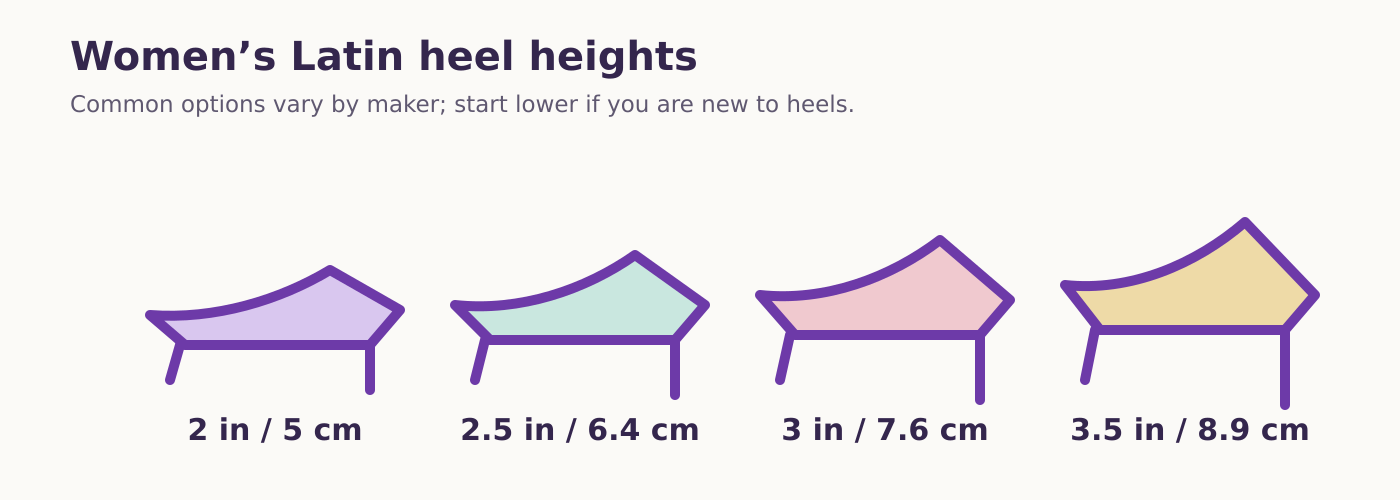
Choosing a heel height
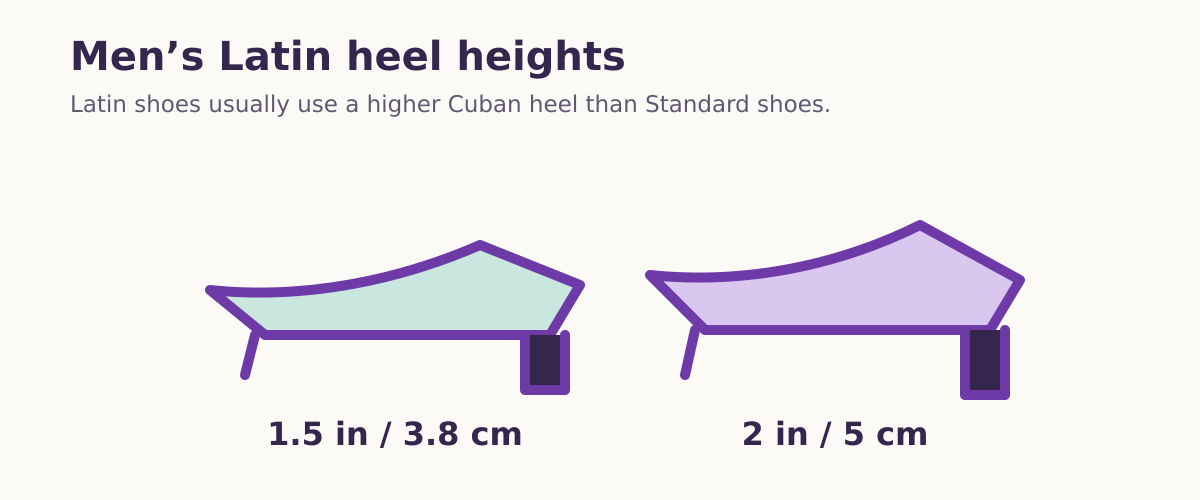
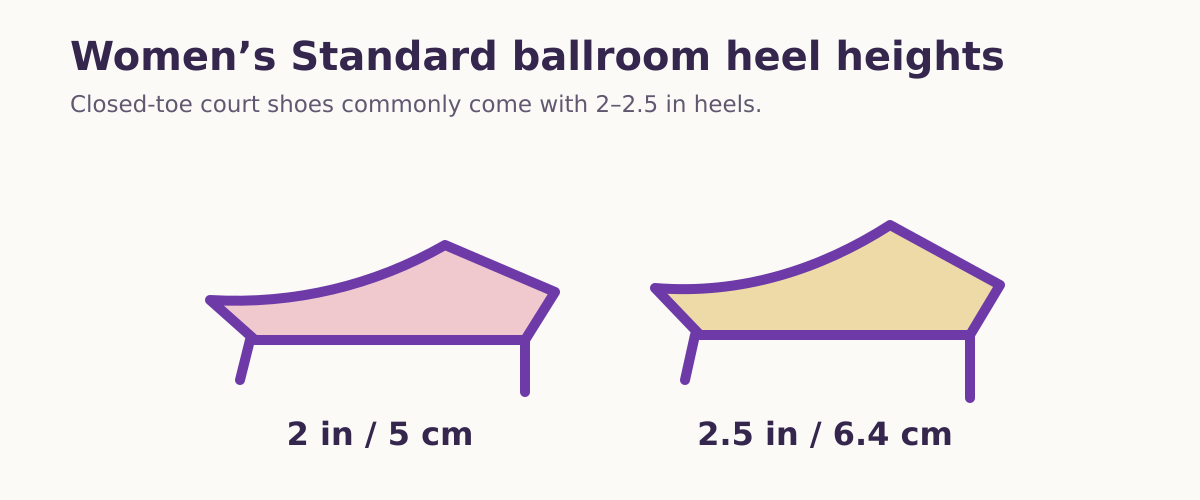
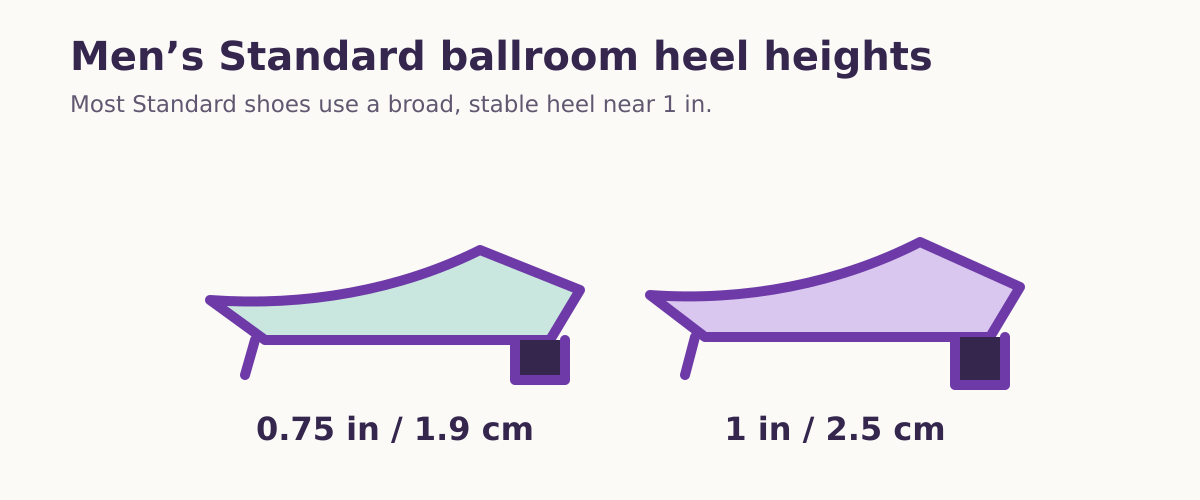
Start with the lowest heel that lets you stand naturally and control your weight changes. A new dancer who rarely wears heels will usually learn more in a 5–6.4 cm (2–2.5 in) flared heel than in a narrow 7.6–8.9 cm (3–3.5 in) heel. Men’s Standard shoes are commonly around 1.9–2.5 cm (0.75–1 in), while men’s Latin shoes often use 3.8–5 cm (1.5–2 in) heels.
Choosing a heel shape
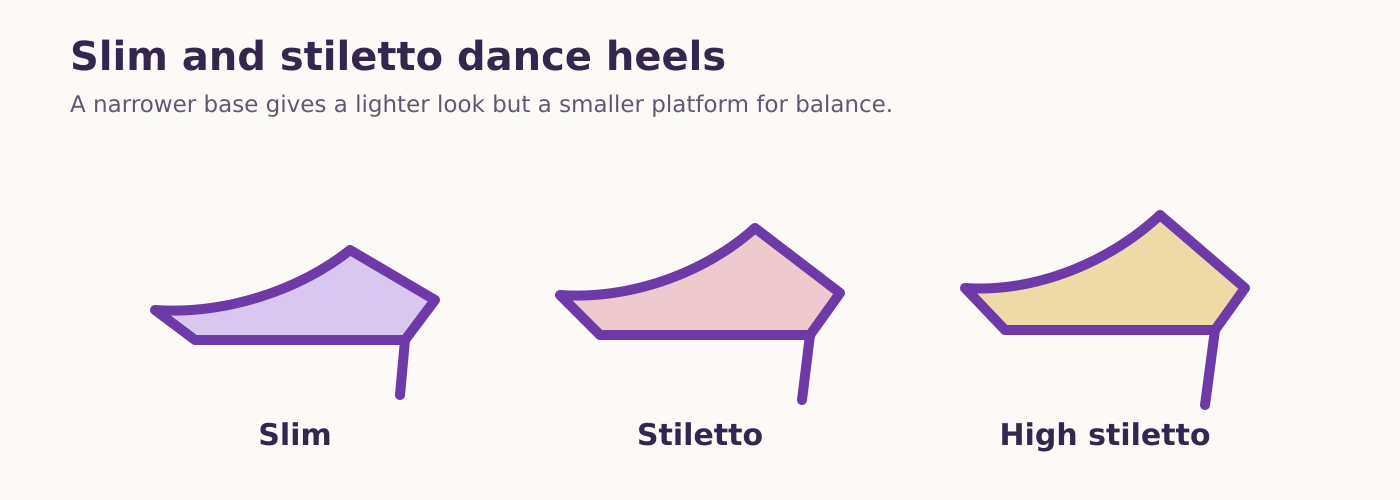
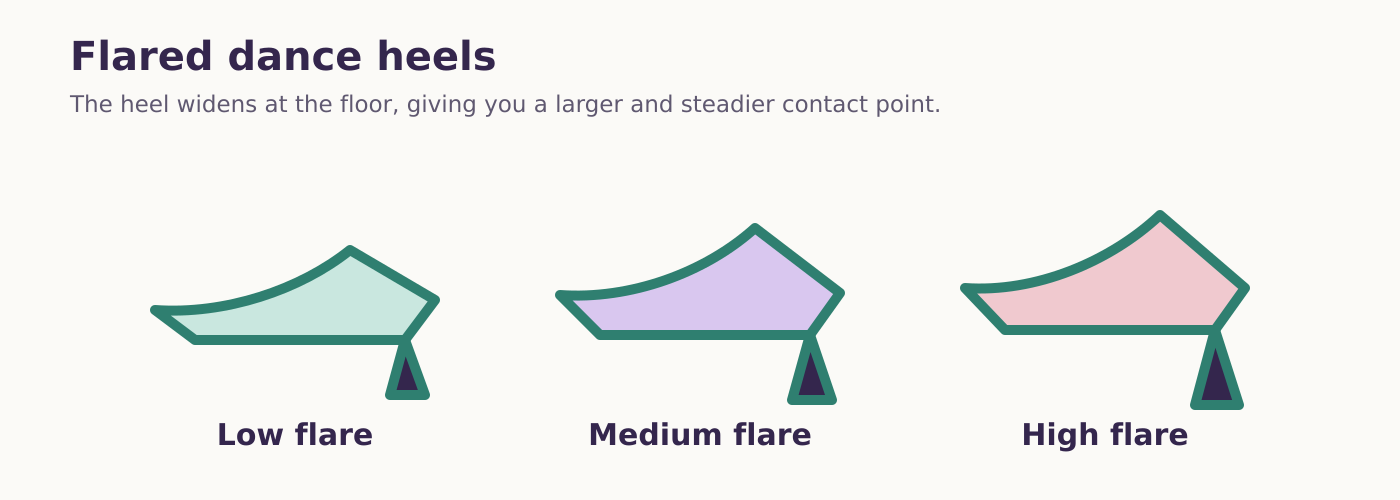
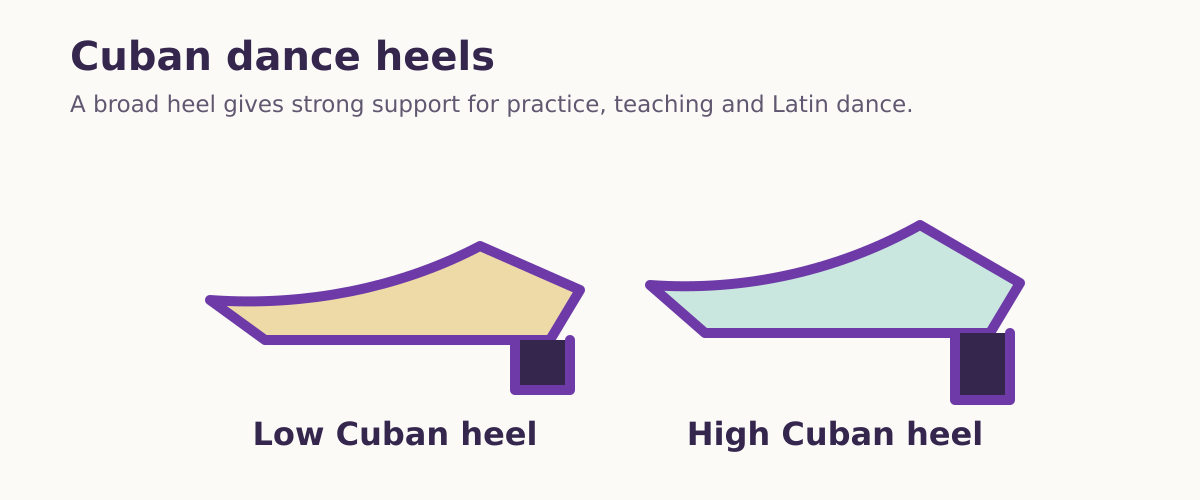
Heel shape changes stability even when the height stays the same. A flared or Cuban heel has a broader contact patch. A slim or stiletto heel gives you less room for error and demands stronger ankle control. Heel protectors can widen the contact point slightly, protect floors and stop the heel tip wearing down.
Soles, flexibility and support
Suede is the common indoor ballroom sole because it balances grip and slide on a clean wood floor. Brush the nap when it becomes smooth or clogged. Do not wear suede soles outdoors: water and grit damage them quickly.
Some social-dance shoes use smooth leather or purpose-made synthetic soles. These can work well, but the amount of slip depends on the material and floor. Rubber is practical for outdoor dancing and dance sneakers, provided the sole has a pivot point and does not grab during turns.
Flexibility should come from the right places. A Latin shoe needs forefoot articulation, while a Standard shoe gives more support through the foot. Very soft shoes can feel comfortable in your hand yet leave a new dancer working harder to control the arch and ankle.
Where to buy your first pair
A specialist dance store is the easiest option because you can compare widths, heels and sole types. Online buying can work if you measure carefully and the retailer accepts returns on shoes tried only on a clean surface. Check the returns policy before ordering from another country; return postage can erase any saving.
LunaSol, Bloch, Capezio and International Dance Shoes all sell ballroom styles online, but each uses its own last and sizing advice. Start with fit and intended dance, then choose colour and finish.

LunaSol models for beginners and weddings
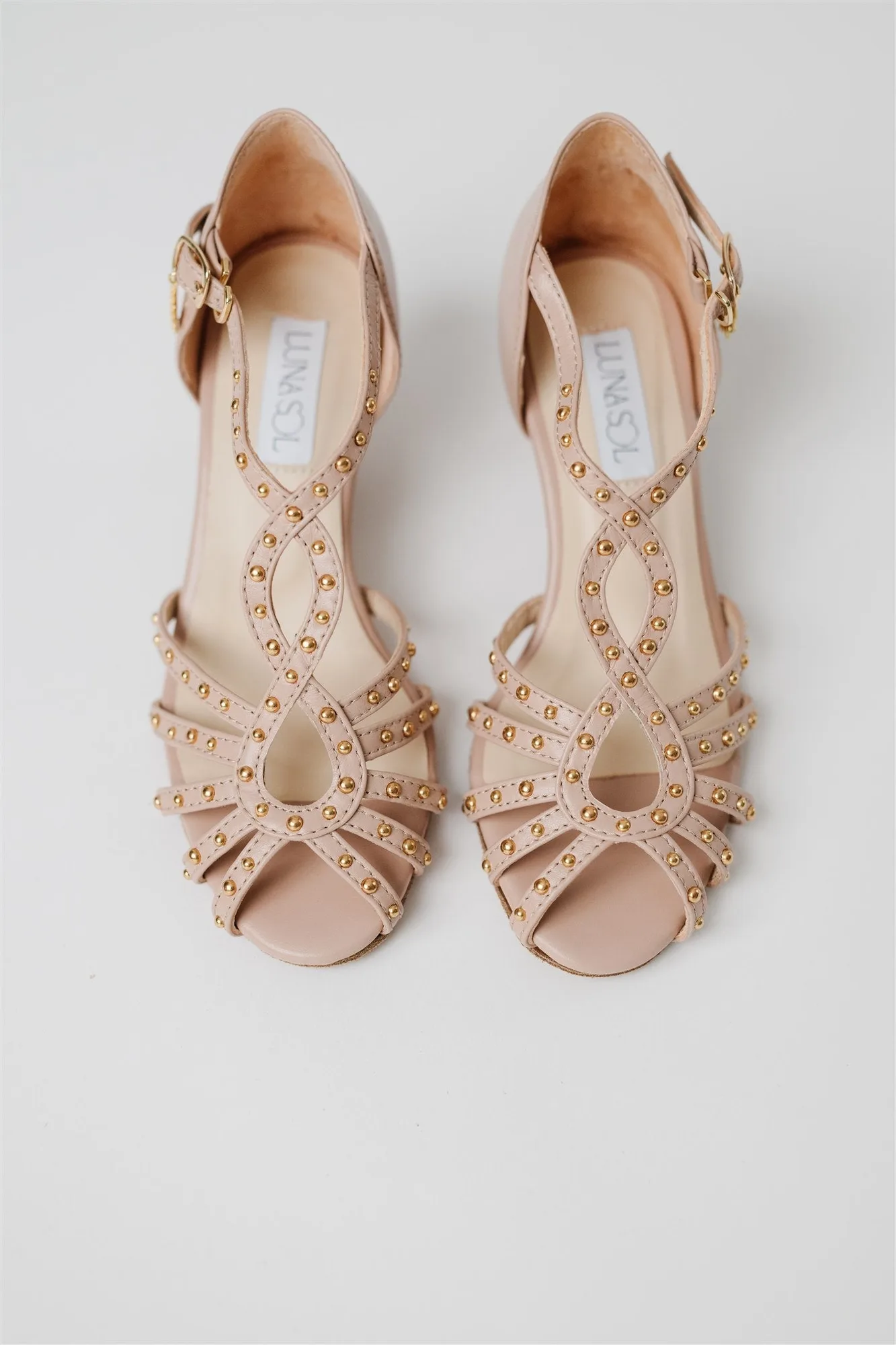
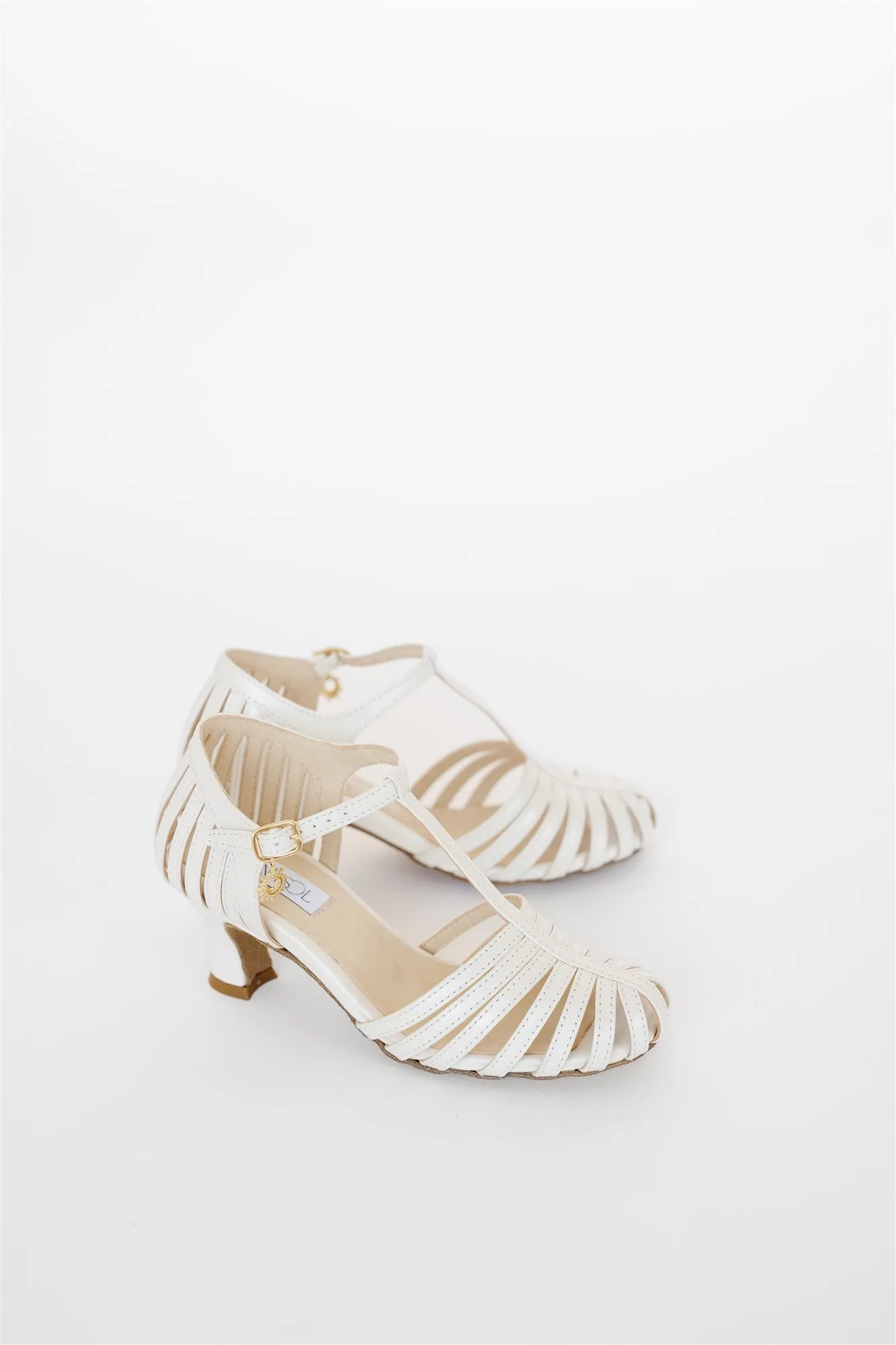
LunaSol is a rare case: a low-volume brand with the finish of a luxury formal shoe and the construction of a real dance shoe. The shoes are handmade in Portugal with Spanish leather, and the current range costs $289–$354. That isn’t a budget price, but the quality is exceptional beside wedding shoes that can cost more than $1,000 without a dance sole, flexible vamp or centre-balanced heel.
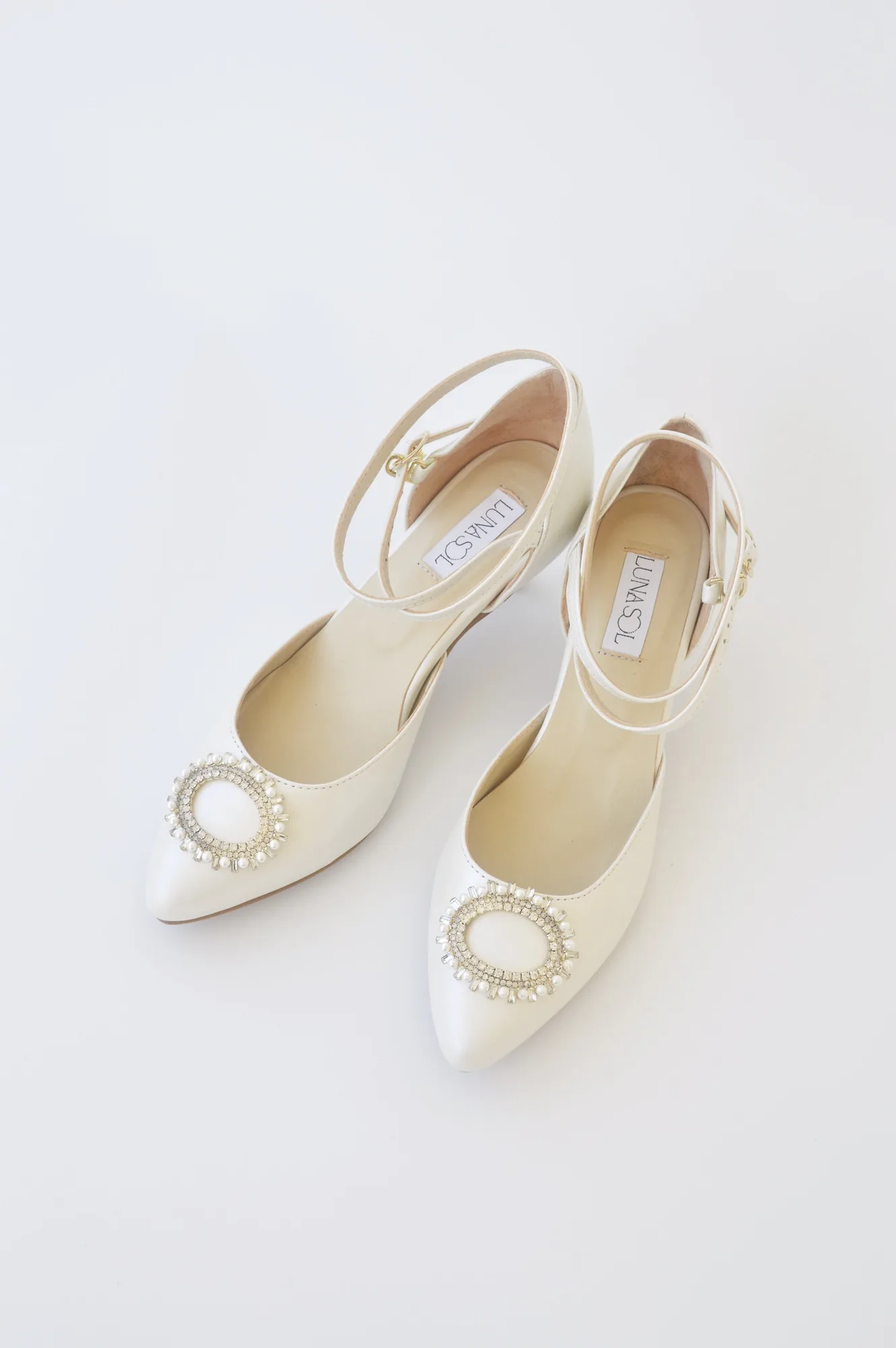
| If you want… | Start with | Heel | Price |
|---|---|---|---|
| The lowest, broadest heel | Grommet Practice | 45 mm (1.8 in), flared | $289 |
| A vintage wedding shoe | Caged Swing | 45 mm (1.8 in), flared | $310 |
| A classic closed toe | White Ballroom or Blue Ballroom | 50 mm (2 in), slim | $319 |
| Lace with a closed toe | Lace Ballroom | 50 mm (2 in), slim | $324 |
| More toe articulation | Open Toe Tango | 60 mm (2.4 in), flared | $289 |
For a first pair, I would choose Grommet Practice or Caged Swing if heel stability is the priority. Pick White, Blue or Lace Ballroom when a closed toe and formal look matter more. Choose the suede sole for clean indoor floors; choose the street sole for outdoor ceremonies and mixed surfaces. Not every model or size is always available.
See the full current LunaSol range in our ballroom shoe guide, or compare four designs with luxury wedding shoes in our side-by-side LunaSol and designer shoe guide.
A simple first-pair checklist
- The shoe matches the dances you take most often.
- Your heel does not lift when you walk or rise.
- Your toes lie naturally without numbness or sharp pressure.
- The fastening stays secure through turns.
- The heel height lets you balance without pitching forward.
- The sole suits your usual floor.
- You can return or exchange the pair after a careful indoor try-on.
If you take mixed ballroom classes, a low practice shoe is often the most practical first purchase. You can add a dedicated Standard or Latin pair once your dancing and preferences become clearer. Our guide to the best ballroom practice shoes explains those options in more detail.
Thanks for this superb post 🙂
It was suuuper helpful! I´m taking your wisdom shoe-shopping with me <3