The right ballroom shoe lets you turn without sticking, feel the floor and keep your foot secure when your weight changes. The wrong pair can slide at the heel, crush the toes or make a modest heel feel unstable.
This 2026 guide separates Standard and Smooth shoes from Latin and Rhythm shoes, then recommends current models and practical lower-cost options. Fit matters more than brand, so treat every recommendation as a shortlist rather than a substitute for trying shoes on.
This article contains affiliate links. If you buy through one, we may earn a commission at no extra cost to you.
Updates
- September 2026: Added LunaSol’s full current range, prices and new official product images.
- September 2026: Rechecked LunaSol materials, heel heights, sole choices and stock.
Our ballroom dance shoe picks for 2026
| Use | Pick | Why it made the list |
|---|---|---|
| Wedding and ballroom crossover | LunaSol range ($289–$354) | Luxury-level materials, dance-specific construction and formal styling |
| Women’s Latin / social ballroom | Werner Kern July | Soft upper, adjustable straps, suede sole and stable flare-heel options |
| Women’s custom-fit choice | Very Fine ballroom shoe | Wide range of heel, width, colour and material combinations |
| Men’s all-rounder | Bloch Xavier | Full-grain leather Oxford with a flexible suede sole and low ballroom heel |
| Men’s Standard | Capezio social ballroom shoe | Traditional profile and suede sole from a widely available dance brand |
| Lower-cost women’s option | Joocare cross-strap ballroom shoe | Closed toe and low heel at a marketplace price |
| Lower-cost men’s option | NLeahershoe lace-up dance shoe | Light lace-up construction and suede-style dance sole |
Availability, colours and prices change by country and size. Check the current product page and return policy before ordering.
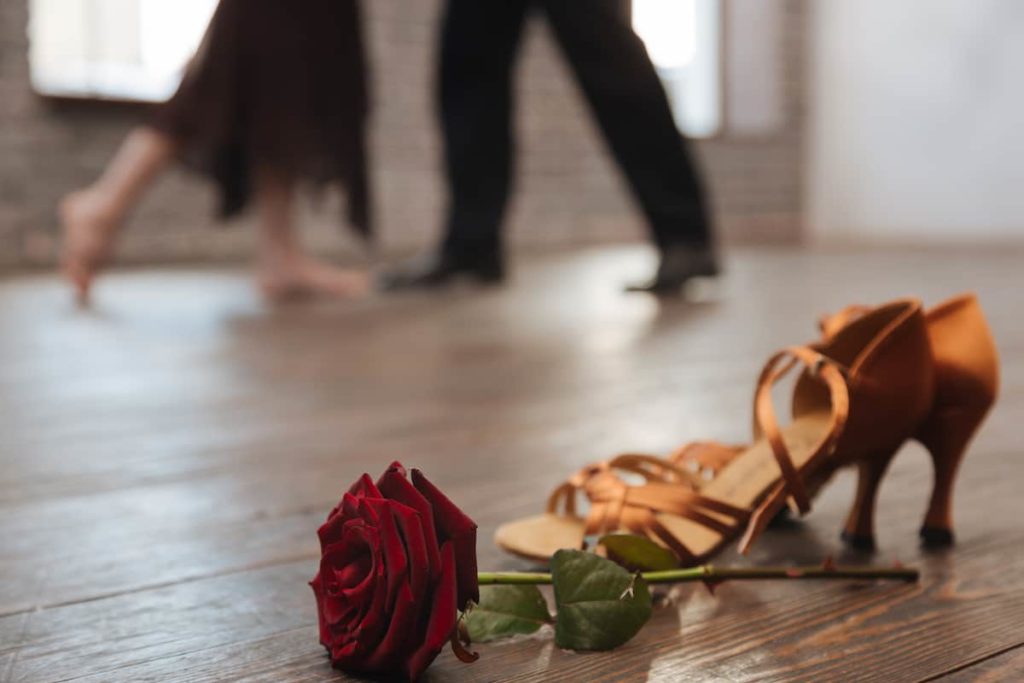
Standard and Smooth versus Latin and Rhythm shoes
Women’s International Standard shoes are normally closed at the toe, with a secure heel cup and a heel commonly around 5–7.5 cm (2–3 in). American Smooth dancers also use closed-toe shoes, though open styles appear at social and lower-level settings. The closed upper supports travelling dances such as waltz, foxtrot and quickstep.
Women’s Latin and American Rhythm shoes are commonly open at the toe with multiple straps and a more flexible forefoot. Their heels often sit farther under the foot and may be slimmer or more flared. That construction suits articulated feet, faster direction changes and the forward foot pressure used in cha-cha, rumba, samba and jive.
Men’s Standard shoes usually have a low heel of about 2.5 cm (1 in). Men’s Latin shoes use a higher Cuban heel, often around 4 cm (1.5 in), to change the posture and leg line. For beginner social classes, a low-heeled leather Oxford with a suede sole can cover several ballroom styles.
How ballroom dance shoes should fit
A dance shoe should fit close enough that your foot and shoe move together. Your heel should not lift when you walk or rise onto the ball of the foot, and the widest part of your foot should sit over the broadest part of the sole.
Do not automatically buy half a size smaller than your street shoes. Dance brands use different lasts and size systems, and your street shoes may already contain extra room. Start with the maker’s chart, measure both feet late in the day, and read whether the listing uses US, UK or EU sizing.
- Closed-toe shoes: toes should lie flat without hitting the end or curling.
- Open-toe sandals: toes should finish close to the front edge, not hang over it.
- Heel cup: should hold the rear foot without gaping or cutting the Achilles tendon.
- Straps: should stabilise the foot without carrying all your weight.
- Width: the foot should not spill over the sole or feel numb after a few minutes.
For a more detailed first-pair checklist, see our guide to ballroom dance shoes for beginners.
Heel height and shape
Choose the lowest heel in which you can keep the whole foot organised through a basic step. A higher heel moves your weight forward and reduces your margin for poor alignment. It does not create better Latin technique by itself.
Flare heels give a broader contact patch than slim heels of the same height. Cuban heels feel stable and suit practice, social dancing and some Rhythm styles. Heel protectors can widen the contact point slightly and protect both the heel tip and venue floor; some competitions require them.
Suede soles: good on dance floors, bad outdoors
Most dedicated ballroom shoes use chrome suede on the outsole. It gives controlled slip on clean wood floors and can be refreshed with a wire shoe brush. Brush from toe to heel with the shoe off your foot, then clear away loose fibres.
Do not wear suede soles outdoors. Water, grit and pavement damage the nap and carry dirt onto the dance floor. Use a shoe bag and change at the venue. If your classes take place on rough concrete, vinyl or a multipurpose floor, ask the teacher whether a leather, split rubber or practice-shoe sole works better.
LunaSol review: exceptional formal shoes built for dancing
LunaSol is the rare small-batch shoe brand that closes much of the gap between formalwear and a proper dance shoe. The current range costs $289–$354. The shoes are handmade in Portugal with Spanish leather, soft linings, carefully placed straps and heels built around balance. The materials and finish can stand beside designer wedding shoes costing well over $1,000.
The value is startling. LunaSol keeps the flexible forefoot, secure heel counter and sole behaviour dancers need, then gives the upper the polish of a bridal or evening shoe. Most models offer a suede dance sole or a harder street sole. Choose suede for clean indoor dance floors and street for ceremonies, outdoor photographs and mixed surfaces.
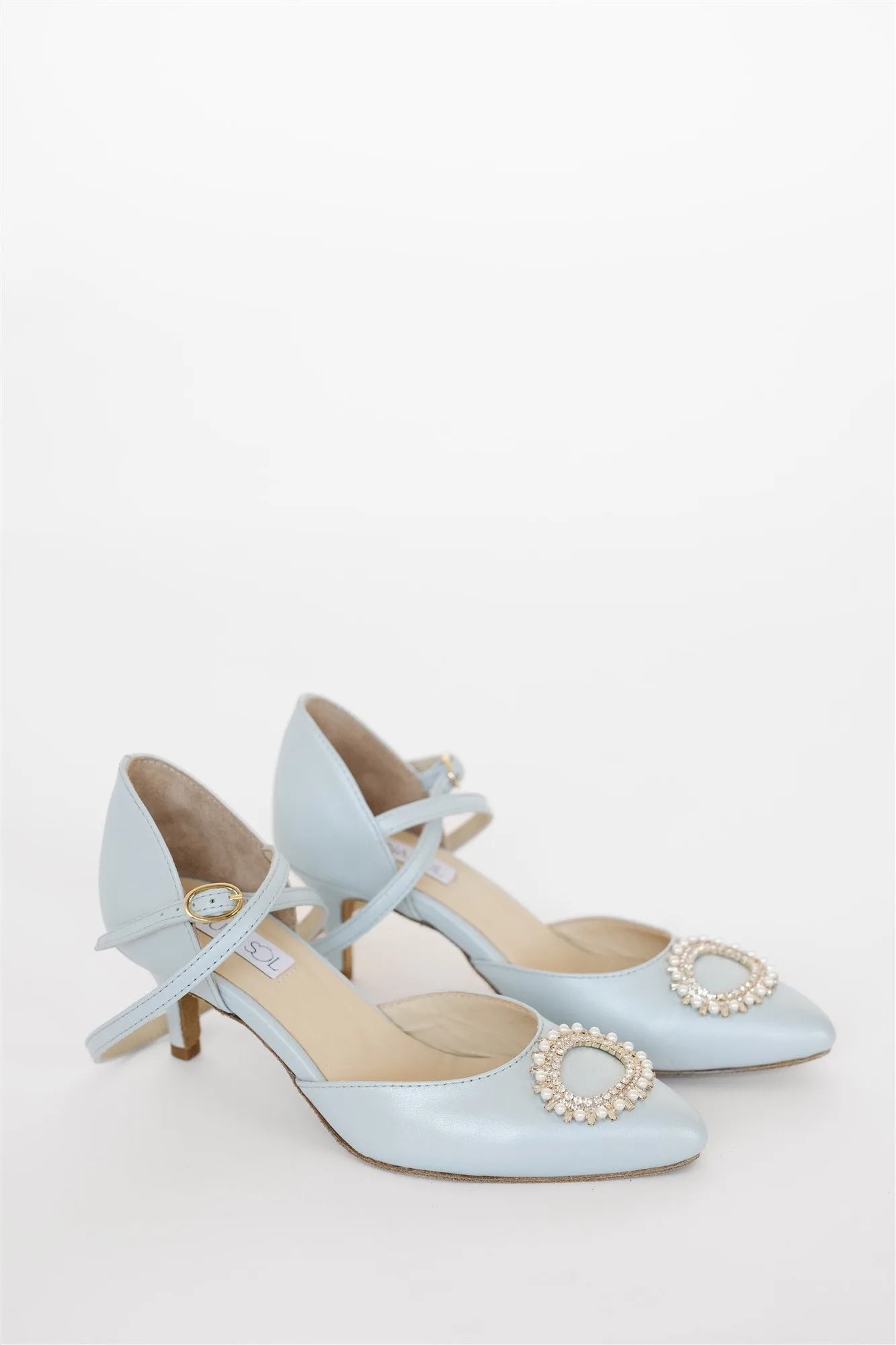
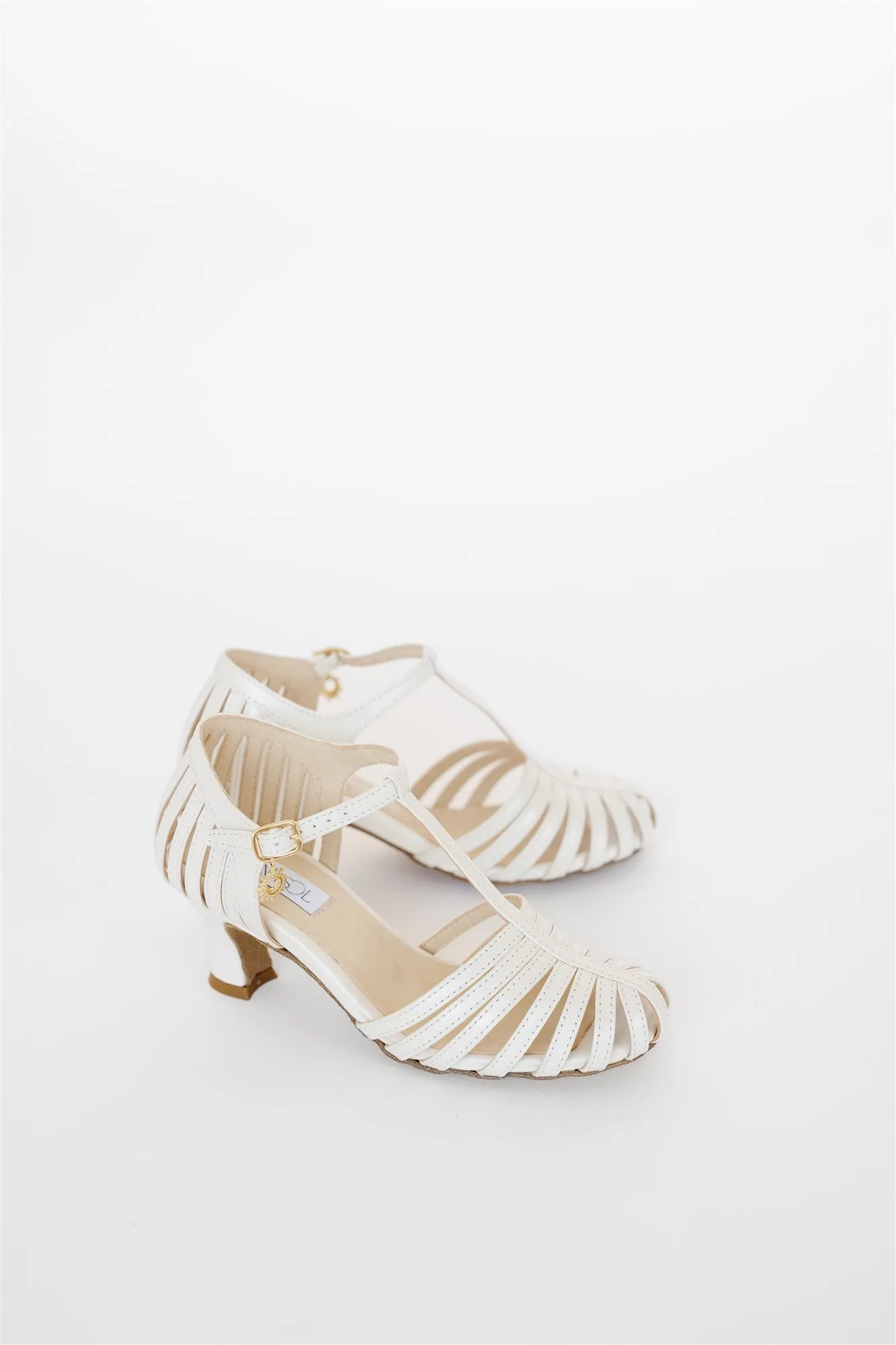
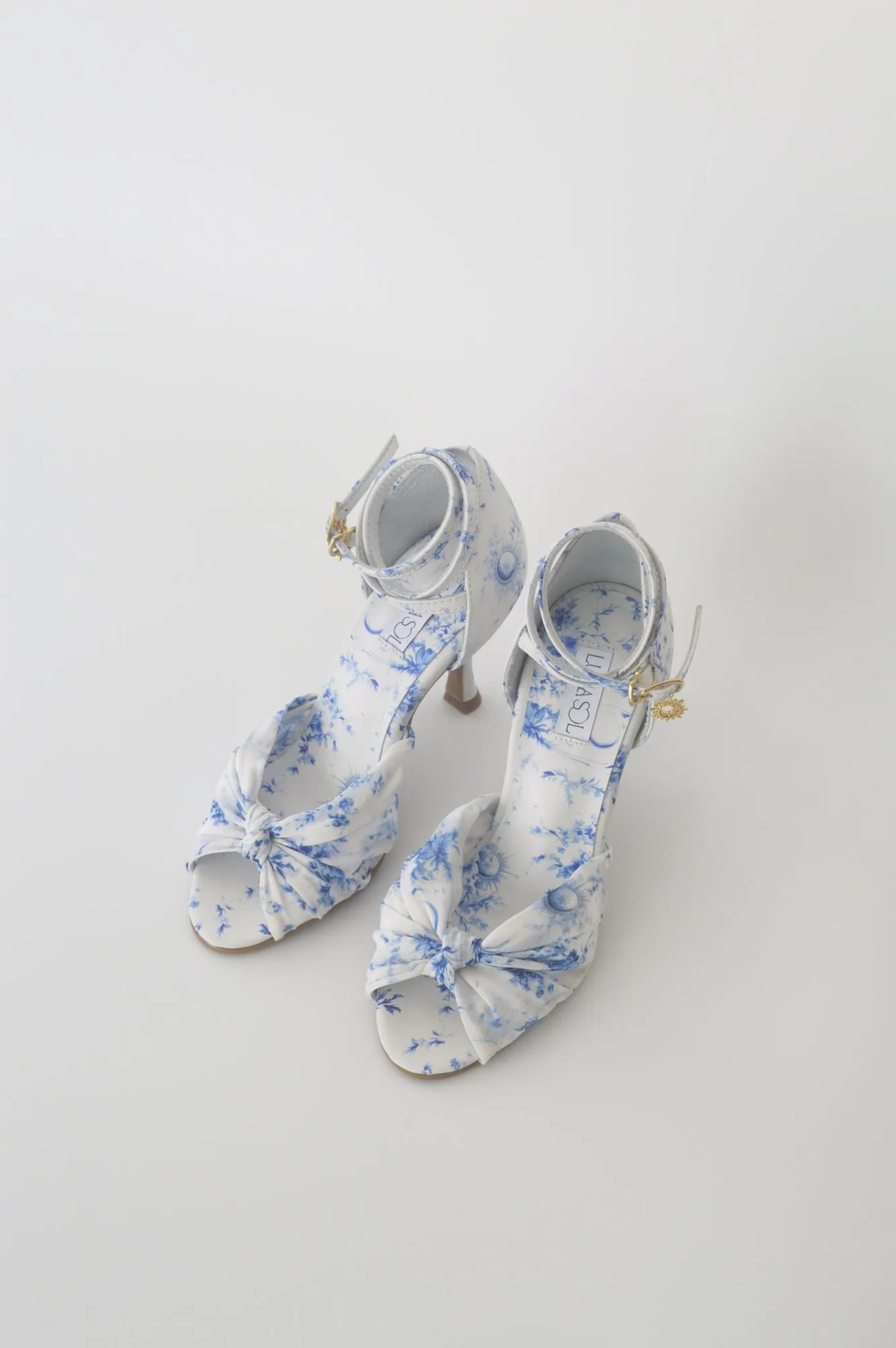
Current LunaSol models and prices
| Model | Heel | Best for | US price |
|---|---|---|---|
| Grommet Practice | 45 mm (1.8 in), flared | Practice, salsa, swing, outdoor weddings | $289 |
| Open Toe Tango | 60 mm (2.4 in), flared | Tango, salsa, Latin | $289 |
| Caged Swing | 45 mm (1.8 in), flared | Swing, social ballroom, long events | $310 |
| Blue Ballroom | 50 mm (2 in), slim | Weddings, Standard, Smooth | $319 |
| White Ballroom | 50 mm (2 in), slim | Weddings, Standard, Smooth | $319 |
| Lace Ballroom | 50 mm (2 in), slim | Weddings, waltz, social ballroom | $324 |
| Anna Caged Tango | 60 mm (2.4 in), flared | Tango, ballroom, outdoor weddings | $329 |
| Pearl Tango | 60 mm (2.4 in), flared | Tango, salsa, formal events | $329 |
| Blue and White Floral Ballroom | 60 mm (2.4 in), slightly flared | Ballroom, weddings, statement dressing | $354 |
| Blue and White Floral Chiffon Latin | 75 mm (3 in), slim | Latin, salsa, weddings | $354 |
| Ivory Chiffon Latin with Crystals | 75 mm (3 in), slim | Latin, salsa, formal events | $354 |
My easiest recommendations are Caged Swing or Grommet Practice for the lowest, steadiest heel; Blue Ballroom, White Ballroom or Lace Ballroom for a closed-toe wedding shoe; and Open Toe Tango or Pearl Tango when you want more forefoot movement. The two Chiffon Latin models give you the highest heel and the softest-looking upper, but they ask for more ankle control.
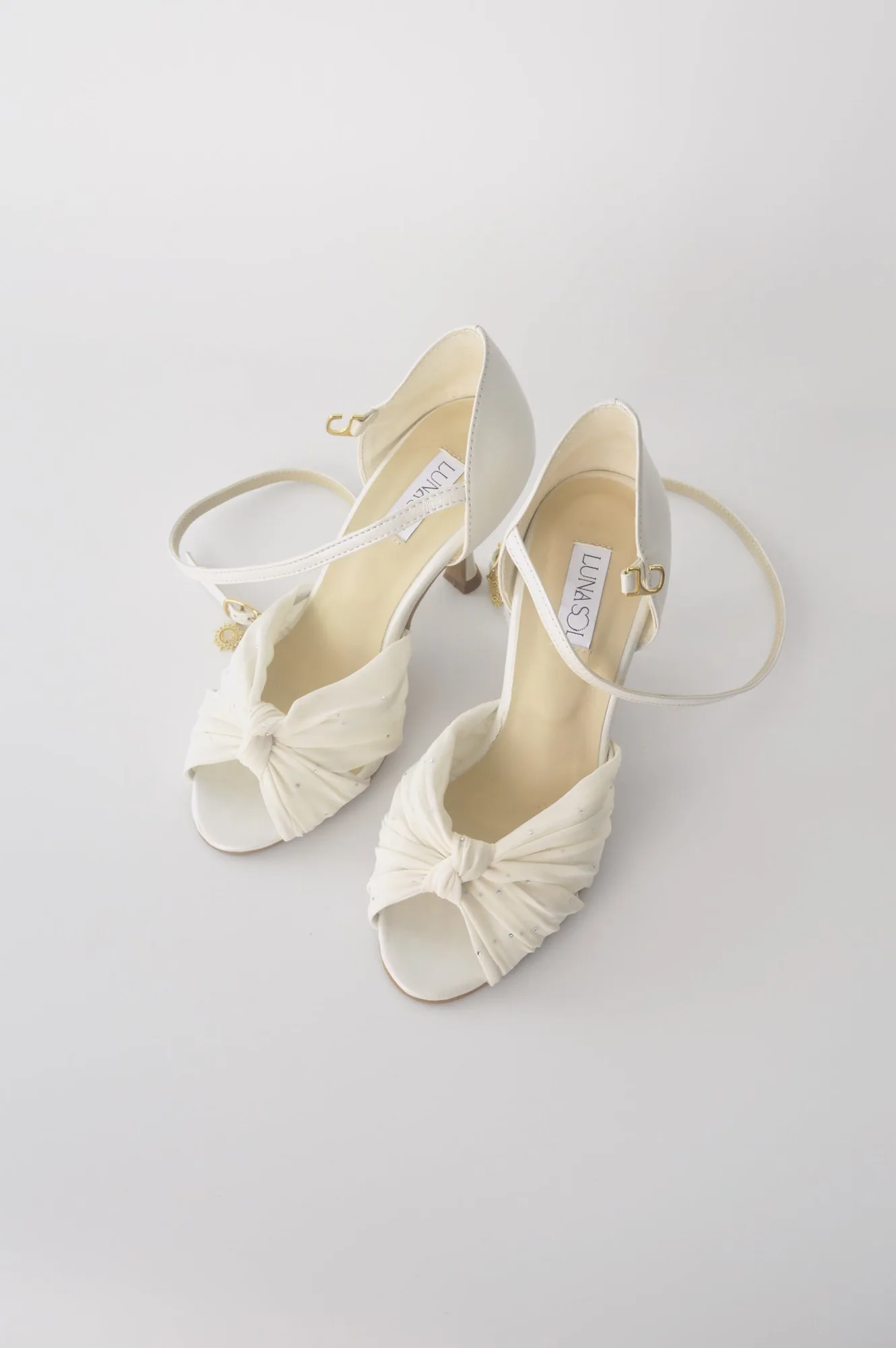
The trade-offs are availability and returns. LunaSol produces in small numbers, so a preferred size or sole can sell through. Returns currently run for 14 days and go to store credit or exchange. Check the exact product page before ordering, especially for a wedding date.
For a direct visual comparison with luxury wedding shoes from Manolo Blahnik, Jimmy Choo, Christian Louboutin and Valentino, see LunaSol vs designer wedding shoes.
Women’s Latin pick: Werner Kern July
The Werner Kern July is an open-toe sandal sold in several materials and heel configurations. Current versions use an adjustable cross strap, flexible latex midsole, heel cushioning and suede outsole. The broad step surface on the flare heel gives more confidence than a very slim heel.
Werner Kern uses UK sizing and different lasts across the range, so compare the exact product page rather than assuming every “July” variant fits alike. This is the higher-cost pick for someone who dances often and values a softer upper and carefully finished sole.
Customisation pick: Very Fine
Very Fine is still practical because the company offers many women’s models in different widths, heels, colours and materials, including made-to-order combinations. That helps dancers who cannot get a secure fit from one standard satin sandal.
Check whether the exact pair is stocked or made to order; custom orders can take longer and may have different return rules. The range is broad enough that the model number matters more than the brand name alone.
Men’s all-rounder: Bloch Xavier
The Bloch Xavier is a traditional black leather Oxford with a flexible suede sole and low heel. It works for Standard, Smooth and general social ballroom without the pronounced posture change of a Latin Cuban heel.
Its conservative styling also makes it easy to pair with practice clothes or formalwear. If you compete in Latin, buy a purpose-built Latin shoe later rather than expecting one low heel to cover every discipline.
Budget ballroom shoes: where to compromise
Low-cost marketplace brands such as Joocare, Yokala and JZNX can be adequate for a short beginner course. Quality control, sizing and heel placement are less consistent than on established dance brands, so use a seller with simple returns.
Reject a pair if the heel wobbles, the shank twists excessively, glue is separating or the sole sits unevenly. Saving money is reasonable; trying to dance through a structurally poor shoe is not.
When practice shoes make more sense
If you spend most of your time in lessons, a closed practice shoe with a Cuban heel can be more comfortable and durable than satin competition footwear. It protects the toes, gives the forefoot room to work and matches ordinary training clothes. See our separate guide to the best ballroom practice shoes.
What to buy
Buy for the dance you do most and the floor you actually use. A beginner doing mixed social ballroom usually needs a secure low heel and controlled sole, not a specialised competition silhouette. Regular Standard dancers should prioritise a closed upper and stable heel; Latin dancers need flexible forefoot articulation and straps that hold the foot over the sole. If two models feel equally good, choose the pair with the better return policy—you will learn more from ten minutes of basic steps than from a page of specifications.