Social dance etiquette is the practical agreement that lets two people enjoy a song without sacrificing comfort or safety. It starts before you touch and continues until both dancers have left the floor.
Lead and follow are dance roles, not genders. Both partners share responsibility for timing, connection, boundaries and the people around them.
Asking for a dance
Make eye contact and ask clearly: “Would you like to dance?” A hand offered from a respectful distance can support the question, but grabbing someone or steering them onto the floor does not count as an invitation.
Anyone can ask. If you want a particular role, say so: “Would you like to lead this one?” or “May I follow?” This avoids assumptions and helps role-switching dancers find each other.
Accepting and declining
A simple “yes” or “no, thank you” is enough. You do not owe a reason, a later dance or an alternative partner. A decline can be about fatigue, injury, the song, personal boundaries or nothing the asker needs to know.
Take a no once and move on without argument, sulking or asking the person’s friends for an explanation. If someone declines and then accepts another invitation, let it go. Consent is specific to that dance and that partnership.
For a salsa-specific version, see our guide to asking, accepting and leaving a salsa dance.
Agree on the connection, not every move
Start with a neutral hold and enough room for both people to find their balance. Close embrace, dips, lifts, deep body rolls, head movement and weight-sharing all need more trust and skill than a basic open hold. Do not assume that accepting a dance means accepting every kind of contact.
A polished festival clip may show movements that need more preparation than the video makes visible. Before you try one with a new partner, read our guide to bachata festival demos and social dancing.
You can ask in plain language: “Is close hold okay?” or “Do you want to avoid dips?” During the dance, a partner can create more distance, release a hand, reduce a movement or say no. Treat that response as useful information, not rejection.
What leaders are responsible for
- Offer clear preparation and direction without squeezing, dragging or using the follower’s arm as a lever.
- Choose patterns that fit the partner’s response and the available floor space.
- Look before sending a partner into an open area, turn or travelling figure.
- Do not force flexibility, balance, speed or closeness.
- Simplify immediately when connection or timing becomes unclear.
What followers are responsible for
- Maintain your own balance and complete each weight change rather than hanging from the connection.
- Respond to the information that arrives instead of anticipating a memorised pattern.
- Control styling so arms, legs and hair do not hit your partner or another couple.
- Use an appropriate level of tone; going limp or resisting every direction makes communication harder.
- Protect your boundaries. A follow is always allowed to stop, release or modify an unsafe movement.
West Coast Swing gives both roles a clear balance check: during the anchor, each partner creates an away connection while staying over their own feet. Our West Coast Swing anchor-step guide explains how to practise it without pulling.
West Coast Swing partners can also negotiate time for improvisation through the same shared responsibility. Our guide to follower voice in West Coast Swing explains invitations, extensions, and the point where a choice becomes backleading.
Floorcraft: protect the shared floor

On a crowded floor, the usable space belongs to everyone. Keep steps and styling smaller, remove risky tricks, and leave room around beginners. The dancer who can see the direction of travel should check it, but both partners should stay alert.
| Floor | What good floorcraft looks like |
|---|---|
| Salsa or bachata | Compact slot or rotation, controlled turns, no unprepared dips |
| Swing | Shortened rock steps and swing-outs; aerials stay in jams, performances or dedicated practice |
| Progressive ballroom | Travel anticlockwise around the line of dance and use the centre for slower or stationary work where local custom allows |
| Very crowded social | Basic steps, small turns and pauses are better than patterns that claim new space |
If a collision happens, stop long enough to check on the person and apologise. Being technically “in the right” does not make an injured dancer feel better.
Timing and adapting to a partner
Start simply and establish the basic before adding speed or complexity. If you use different salsa timings, agree or make the count clear rather than wrestling over it. Our On1 versus On2 guide explains the difference.
Adapting does not mean performing below your level. It means choosing material both people can dance well. A clear basic with good timing often feels better than a difficult pattern that only one partner understands.
Feedback belongs in class unless invited
Do not teach or correct a partner during a social dance unless they ask. Even then, keep the answer brief and return to dancing. If something hurts or feels unsafe, say what you need rather than diagnosing the other person’s technique: “Please don’t pull my arm” is clearer than an unsolicited lesson.
Hygiene and practical preparation
- Wear clean indoor shoes that suit the floor and do not leave marks.
- Use deodorant, bring breath mints if you need them, and avoid heavy fragrance.
- If you sweat heavily, bring a spare shirt and a small towel.
- Keep long hair and jewellery under control when they could strike a partner.
- Stay home when you are contagious, and wash or sanitise hands during the event.
Ending a dance
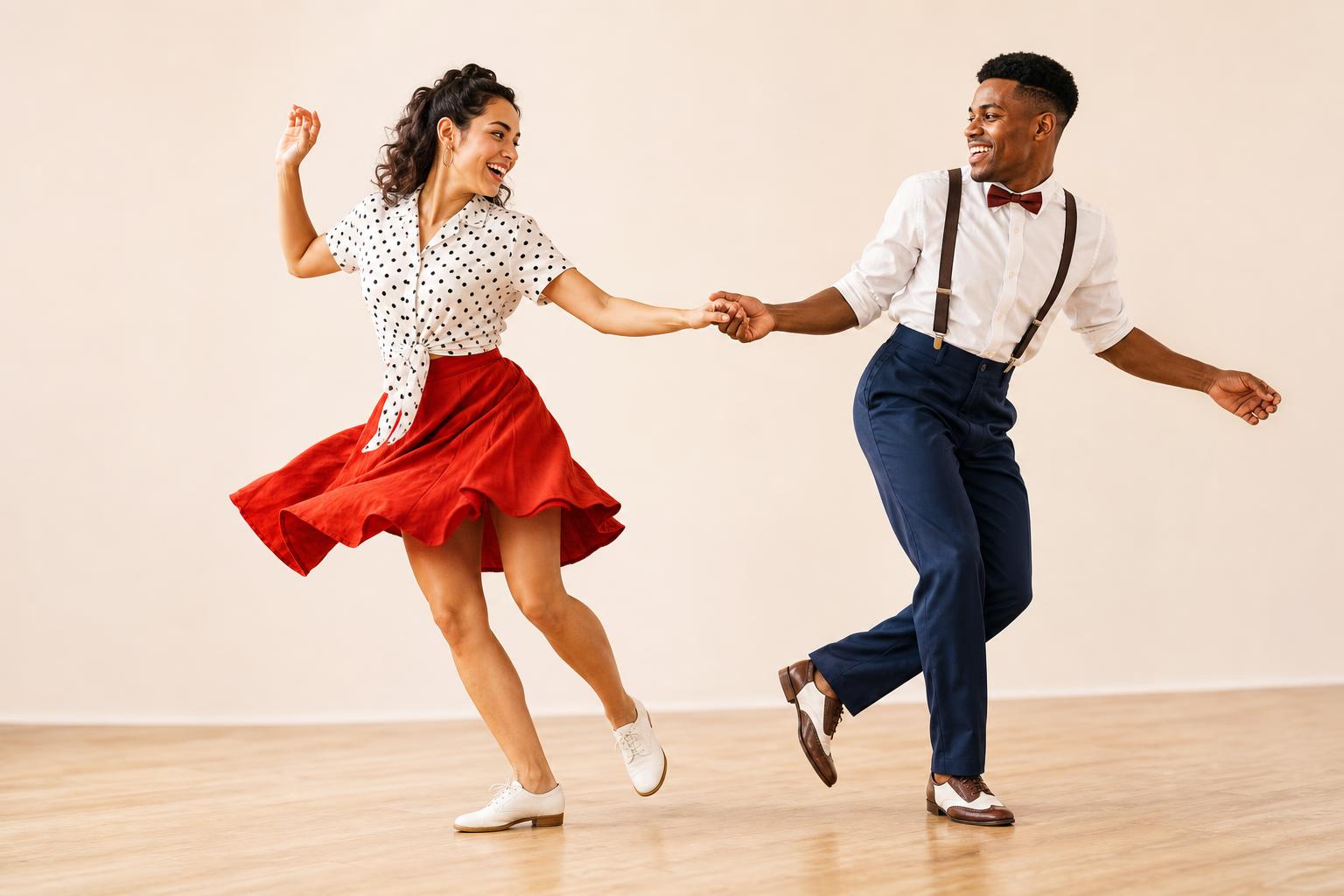
Thank your partner when the song ends and leave enough room for the next couple. You can end early if you feel pain, dizziness, disrespect or a crossed boundary. “I need to stop—thank you” is sufficient.
Good etiquette is specific and observable: ask, listen, control your own body, watch the floor and accept limits without drama. Those habits make you a better social partner long before you learn your most complicated pattern.