The right swing dance shoe depends less on gender than on three practical things: the floor, the sole and the fit. A smooth wooden floor may call for suede or leather. A dusty bar floor often needs a little more grip. Lindy Hop also asks for more cushioning and flex than Balboa, where small pivots and close footwork reward a slimmer sole.
This 2026 update replaces the old list of generic character shoes with current, dance-ready choices. It also explains when an ordinary sneaker or dress shoe works, when it does not, and what to check before you spend money.
Quick answer: Beginners usually do well in a light, flexible shoe with moderate slide. Aris Allen’s suede-soled canvas sneakers are an easy all-round choice. Dancers who prefer a vintage dress-shoe look can choose an Aris Allen cap-toe or T-strap. A basic Keds Champion can also work on a suitable floor, but its rubber sole may feel too sticky until it wears in or a cobbler adds suede.
What makes a good swing dance shoe?
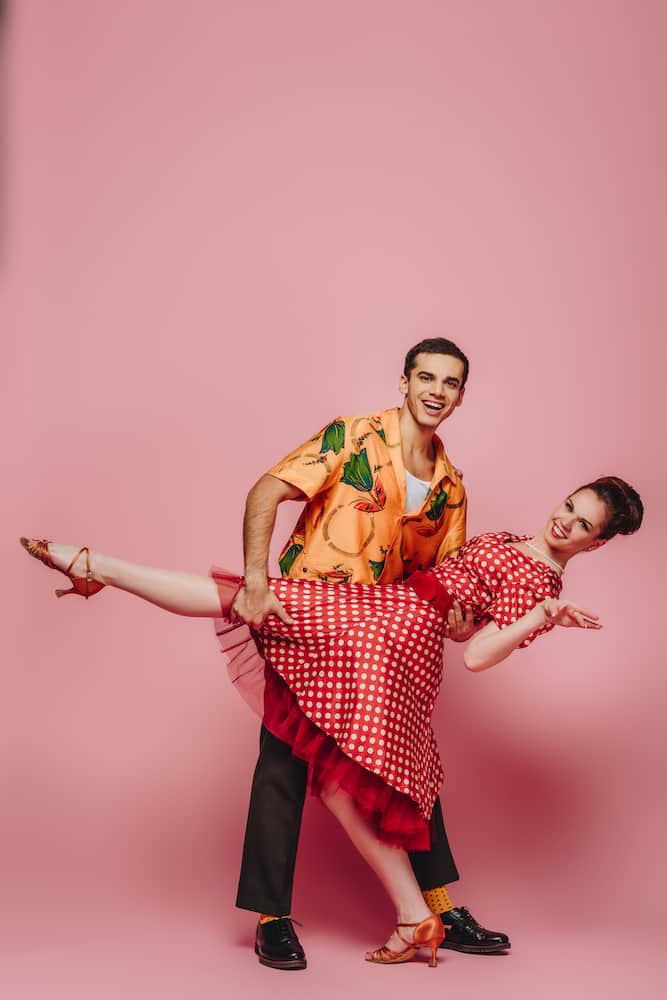
A swing shoe should let you change direction without locking your foot to the floor. That does not mean the slickest sole is always best. Too much slide makes it harder to stop, absorb momentum and stay balanced. Too much grip can load the knees during turns.
- Flexible forefoot: You should be able to roll through the foot and bend the shoe near the ball, not through the middle of the arch.
- Secure heel: Your heel should stay in the shoe during kicks, rock steps and swivels. Laces or a strap help.
- Low, stable heel: Flat shoes and low block heels are easier to control during long socials. Higher heels change your balance and need more specific technique.
- Enough cushioning: Lindy Hop and Charleston can be bouncy and athletic. Thin jazz shoes give excellent floor feel but little protection on hard floors.
- A sole matched to the venue: Leather, suede, neolite and dance-sneaker soles all behave differently.
If you are still deciding which version of swing you want to learn, our guide to the main swing dance styles explains how Lindy Hop, Balboa, Charleston, shag and West Coast Swing differ.
Leather, suede or rubber soles?
| Sole | How it feels | Best use | Main drawback |
|---|---|---|---|
| Hard leather | Fast, smooth and responsive | Clean indoor wood floors; experienced dancers | Can be very slippery |
| Suede | Controlled slide that changes with dust and wear | Studios and most social floors | Needs care and should stay dry |
| Neolite or dance rubber | Moderate grip with easier pivots than sports rubber | Mixed floors and dance sneakers | Varies greatly by compound |
| Sports rubber | Grippy | Rough outdoor surfaces | May catch during turns |
Aris Allen’s current sole guide describes hard leather and chrome-leather suede as its main swing options. Other swing specialists also sell neolite, which sits between leather and ordinary rubber. No sole works everywhere, so regular dancers often carry two pairs.
The best swing dance shoes in 2026
1. Aris Allen canvas dance sneakers — best first dedicated pair
Aris Allen makes separate canvas sneaker shapes in a broad size range, but the important part is underneath: a suede dance sole rather than ordinary sports rubber. The removable molded insole gives more support than a thin jazz shoe, and the light canvas upper works well for long Lindy Hop classes and socials.
Choose this if you want a casual shoe that turns easily on wood. Do not wear the suede sole through rain or on rough pavement. Check the brand’s current size notes rather than assuming your street-shoe size will transfer exactly.
2. Keds Champion — best easy-to-find budget option
The Keds Champion is light, flexible and familiar, which is why swing dancers have used it for decades. The standard rubber outsole is not a purpose-built dance sole, though. It may be fine on a dusty or fast floor and frustratingly sticky on clean wood.
If the shoe fits well but grips too much, a cobbler can add suede or leather to the forefoot and heel. That conversion matters more than the logo on the upper.
3. Aris Allen 1932 cap-toe — best vintage lace-up
The 1932 cap-toe uses a period-inspired shape, a flexible hard-leather sole and an adjustable lace-up construction. It suits dancers who want the slide and look of a traditional dress shoe without adapting a modern office shoe.
The hard sole runs faster than suede, especially once polished by use. It makes more sense as a second pair if you are still learning to control turns and stops. Aris Allen currently sells standard and wide versions, so follow the measurements for the exact model.
4. Aris Allen T-strap — best low dress heel
The current black T-strap combines a low, stable heel with a suede-bottom sole and a padded footbed. The strap keeps the heel secure during kicks and turns, while the closed toe gives more protection than an open Latin sandal.
This is a good social-dance choice if you want a dressier shoe without moving to a narrow or high heel. Check both length and width; a strap can secure the instep but cannot fix a toe box that is too narrow.
5. Capezio Jr. Footlight T-Strap — best character-shoe crossover
Capezio’s Footlight T-strap is a stage character shoe rather than a Lindy-specific design. Its closed toe, ankle strap and broad heel can still work for swing classes and performances if you already feel comfortable dancing in a heel.
It is less forgiving than a flat sneaker during a long, fast social. Choose it for the stable stage-shoe shape, not because every dancer needs a heel.
6. Bloch Super Jazz — best lightweight practice shoe
The Bloch Super Jazz fits close to the foot and bends easily, which makes it useful for solo jazz, footwork drills and travel. It gives far less cushioning and lateral structure than a dance sneaker. On a hard floor, that minimal build can become tiring.
Use it when floor feel matters more than support. It is not our first choice for a three-hour Lindy Hop social.
7. Stacy Adams Dickinson — best conventional dress-shoe base
The Dickinson is a conventional cap-toe dress shoe, not a dance shoe. It can still become a workable social pair if the upper fits securely and a cobbler adds the sole you want. This route suits dancers who need a familiar dress-shoe last or want a pair they can replace locally.
Do not assume a smooth-looking synthetic outsole will pivot well. Test it carefully or budget for a sole conversion.
How swing dance shoes should fit
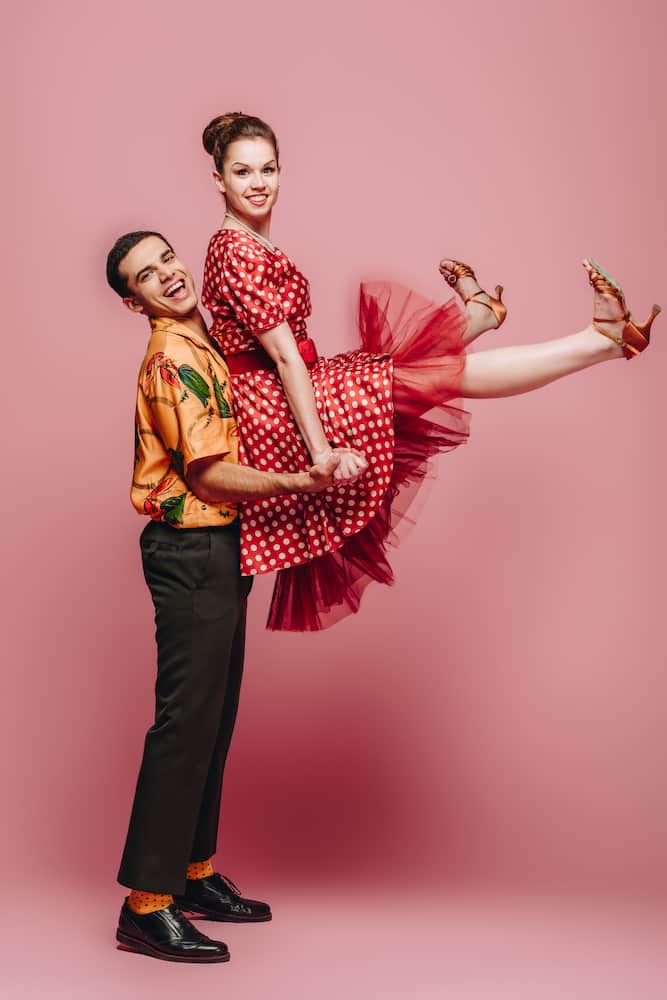
Your toes need room to spread, but the heel should not lift as you rock forward and back. Try the shoes with the socks or tights you will actually wear. Then do a basic, a rock step, a pivot and a small kick. If your toes hit the end, the heel slips or the arch collapses, another size or shape will serve you better.
Feet often swell during a long social, so a painfully tight fit rarely improves. Leather uppers may soften and give slightly across the width, but the shoe will not become longer.
Can you add suede to ordinary shoes?
Yes. A cobbler can attach suede or leather to a suitable flat sole, and many dancers use adhesive suede sheets for a cheaper conversion. A professional job usually lasts longer and gives cleaner edges. The base shoe still needs to be flexible, secure and comfortable; changing the outsole cannot fix a poor fit.
Keep suede dry and carry a wire brush if you prefer a consistent grip. Brush only when the sole becomes packed and too slick for the floor. Always test the result with small turns before dancing at full speed.
Which pair should you buy?
Start with the floor you use most. For regular indoor Lindy Hop, a cushioned suede-soled sneaker is the safest general recommendation. Choose a hard-leather lace-up if you already like a faster sole and want vintage styling. Choose a low T-strap if you want a secure dress shoe without a high heel.
Whatever the style, fit and sole control matter more than appearance. Good social dancing also depends on how you share the floor, so see our guide to social dance etiquette for leaders and followers before your next event.